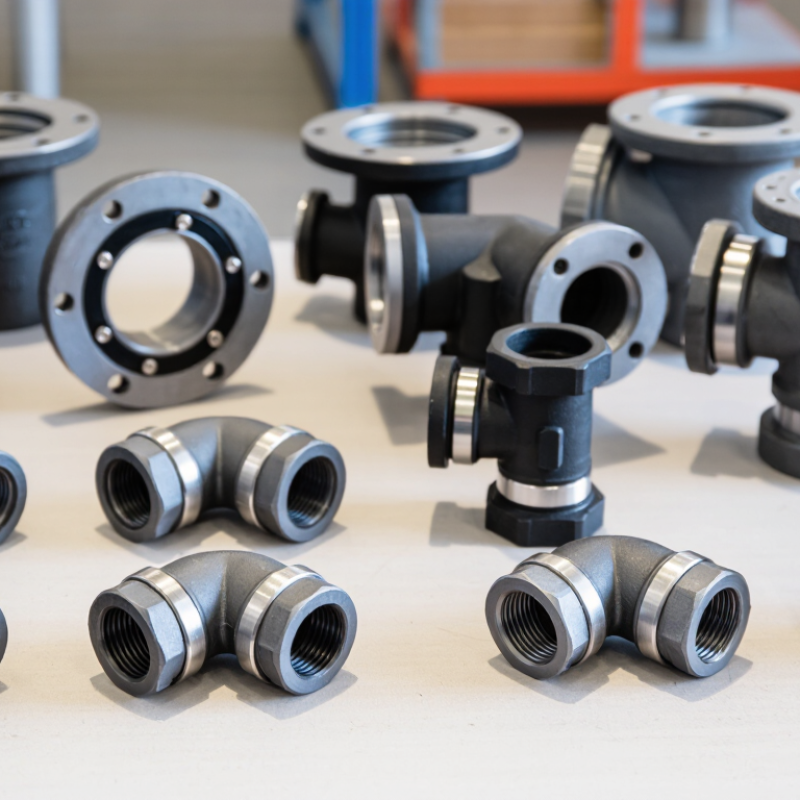
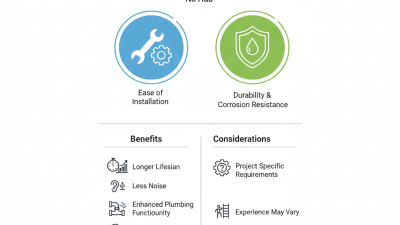
Choosing the right No Hub Fittings can influence drainage reliability, installation speed, and long-term maintenance costs. Global buyers often compare cast iron elbows, tees, reducers, cleanouts, and shielded couplings. The best option depends on building use, pipe dimensions, corrosion exposure, and local plumbing requirements. A product that performs well in one market may not suit another.
Quality begins with verified materials and controlled manufacturing. Buyers should review dimensional tolerances, coating performance, gasket composition, and pressure or leakage test records. Relevant standards may include ASTM, CISPI, EN, or regional specifications. However, standards are not interchangeable automatically. That detail deserves careful attention. Factory audits, batch traceability, and independent inspection can provide stronger evidence than attractive catalog claims. Experienced suppliers should explain installation limits clearly, including torque requirements and compatible pipe types.
A practical evaluation also considers shipping protection, documentation, replacement availability, and technical support. For example, a pallet of fittings should arrive with secure packaging, readable markings, and matching inspection records. Installers need stable dimensions, clean threads where applicable, and couplings that maintain a dependable seal. Small inconsistencies can create costly site delays.
The top No Hub Fittings are not always the cheapest products. They are the products that match verified project conditions and regulatory expectations. Still, no selection guide can remove every uncertainty. Site temperature, installer skill, and regional approval practices may change the result. Buyers should request samples, confirm certifications, and test compatibility before placing large orders. That approach is slower at the beginning, but it can prevent expensive failures later.
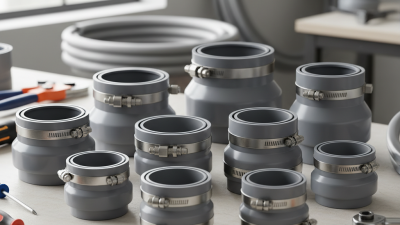
No hub fittings are mechanical connectors for hubless drainage pipes. They usually join cast iron, stainless steel, or compatible plastic pipe ends. A flexible elastomeric sleeve seals the joint. A stainless-steel shield and clamps provide external restraint.
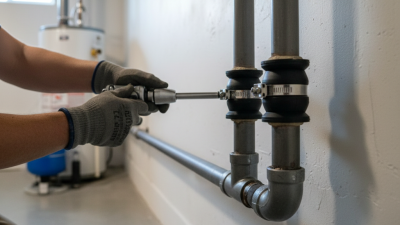
Connection is simple, but accuracy matters. Cut both pipe ends squarely. Remove burrs and wipe away grit. Slide the sleeve over one pipe, align the second pipe, then center the sleeve. Tighten the bands with a calibrated torque wrench. The coupling should grip evenly, not crush the pipe. ASTM C1277 and CISPI 310 provide widely recognized requirements for shielded no hub couplings. Local codes may also reference EN 877 or equivalent standards.
The UN World Water Development Report 2024 states that 3.5 billion people lacked safely managed sanitation in 2022. That figure highlights the need for dependable drainage infrastructure. For global buyers, the top fitting is not simply the cheapest option. It should match pipe outside diameter, temperature, chemical exposure, pressure limits, and the project standard. Stainless-steel shields suit demanding commercial environments, while simpler configurations may fit protected indoor runs. Even experienced crews sometimes overlook pipe movement or poor alignment. I would treat that as a design warning, not a minor installation defect. Product test records, torque instructions, elastomer specifications, and traceable quality documentation deserve careful review. A coupling can look secure while hiding an uneven seal.
No hub fittings connect hubless drainage pipes with a shielded mechanical coupling. Buyers should match the fitting to the pipe’s actual outside diameter and applicable local standards, rather than relying on nominal size alone.
How to read the chart: The values show typical outside diameters for common nominal hubless cast-iron drainage pipe sizes, measured in inches. Straight couplings, reducing couplings, and transition couplings must be selected to match these dimensions and the required drainage-pipe material.
For global buyers, the best no-hub fittings match the pipe material, service conditions, and local standards. Material choice sets the product’s working life.
Drainage fittings commonly use hubless cast iron, while couplings use elastomeric gaskets and stainless steel shields. Cast iron handles heat, impact, and fire exposure better than many lightweight alternatives. Stainless shields resist corrosion in damp service rooms. Gaskets may use neoprene or EPDM, depending on temperature and chemical exposure. Do not treat these materials as interchangeable.
Common nominal sizes include 1½, 2, 3, 4, 5, 6, 8, 10, 12, and 15 inches. Metric markets often specify 50, 75, 100, 125, 150, 200, 250, 300, and 400 millimeters. Actual outside diameter matters more than nominal size. A 100 millimeter pipe may not match every four-inch system. Measure the pipe before ordering. Offset, reducing, wye, cleanout, and trap-adapter fittings also need accurate geometry. Small errors create leaks.
In the United States, ASTM A888 covers hubless cast iron soil pipe and fittings. ASTM C1277 and CISPI 310 address shielded couplings. EN 877 is widely used across European markets. Standards do not automatically confirm compatibility. Verify gasket temperature range, shield width, torque requirements, corrosion resistance, and test reports. Ask for dimensional drawings and traceable inspection records. That step can feel slow. It prevents expensive site changes. Catalogs sometimes list size only, so buyers should challenge incomplete data before approval.
What Are the Top No Hub Fittings for Global Buyers?
No hub fittings support fast, compact connections in residential and commercial drainage systems. Their shielded couplings join hubless cast iron soil pipe with controlled sealing pressure. In homes, standard couplings suit bathroom stacks, kitchen drains, and short horizontal runs. They are practical where access space is limited.
Commercial projects need broader options. Heavy-duty shielded couplings handle larger pipe sizes and demanding drainage conditions. Reducing couplings connect different pipe diameters without complex alterations. Transition couplings help join compatible but different pipe materials. Repair couplings are useful when a damaged section needs replacement in a tight location. They can reduce wall opening work.
Material quality matters.
Buyers should check clamp strength, gasket composition, pipe compatibility, and tested pressure performance. Local plumbing codes and approved standards may differ between markets. A fitting accepted in one region may require additional documentation elsewhere. Product drawings, test reports, and installation instructions improve purchasing reliability.
Field inspection often reveals a simple problem: uneven tightening. One side may look secure while the gasket remains poorly compressed. Calibrated tools and a cross-tightening pattern can prevent this mistake. Still, no fitting solves poor pipe alignment. That detail is easy to overlook. Global buyers should compare operating conditions, access needs, certification requirements, and installer skill before selecting a fitting type.
No hub fittings support fast, compact drainage connections without threaded hubs. The best choice depends on pipe material, dimensions, and operating conditions. Ductile iron fittings often provide strong mechanical performance and stable alignment. Stainless steel options resist corrosion in demanding environments.
However, material alone does not prove quality.
Global buyers should request dimensional drawings, material specifications, and batch traceability records. Certification must match the destination market and intended application. Check testing for leakage, load resistance, temperature, and corrosion exposure. A familiar certificate can still be insufficient if its scope excludes drainage fittings.
Compatibility deserves equal attention. Confirm pipe outside diameter, coupling range, gasket material, and installation torque. Small measurement differences can cause serious leaks.
I have found that supplier claims are useful, but independent verification is safer.
Tips:
Compare samples before large orders.
Measure actual pipe dimensions, not only catalog data.
Ask for recent test reports and inspection photos.
Check whether markings remain readable after installation.
Do not assume one coupling suits every pipe material.
A flexible gasket may improve sealing, yet it can react poorly to certain chemicals or temperatures.
This point is easy to overlook. Also, installation quality affects results, even with excellent fittings. Keep a controlled sample record, because memory is unreliable during multi-country procurement.
Global buyers should evaluate no hub fittings as a complete supply package, not as isolated couplings. Reliable suppliers provide ductile iron or stainless steel shields, resilient gaskets, clear dimensions, and batch traceability. Ask for pressure ratings, material certificates, inspection records, and installation instructions before placing an order. Supplier communication matters. A fast, precise reply often reveals stronger quality control.
Pricing needs a wider view. Compare the fitting price, gasket quality, tooling, packaging, inland transport, duties, and insurance. A cheaper coupling may require replacement parts or create installation delays. Request quotations using the same size, shield grade, and quantity. Small details change the final cost. I would not trust a low offer without checking production capacity and delivery history. Some suppliers quote quickly, but their lead times remain unclear.
Shipping can damage fittings before installation. Use dry cartons, protected shields, and moisture-resistant wrapping for long voyages. Confirm pallet dimensions and container loading plans early. At the jobsite, inspect every shield for dents and every gasket for distortion. Clean pipe surfaces, align the pipes, and keep the required separation between ends. Tighten bolts evenly with a calibrated torque wrench, following the supplied instructions. Do not guess the torque. Even experienced crews sometimes overlook alignment, especially in cramped trenches. Photographing each connection can support quality records and help investigate leaks later.
The figures below are practical, non-brand reference ranges for international purchasing. Prices are indicative export-level estimates in USD per fitting and vary according to material grade, order quantity, certification, surface finish, destination, and freight terms. Buyers should confirm the current quotation, applicable standard, and project approval requirements before ordering.
| Fitting Type | Common Nominal Sizes | Typical Material | Applicable Standards and Compliance | Typical Use | Indicative Export Price per Piece (USD) | Typical Packing Quantity | Estimated Production Lead Time | Shipping and Buying Considerations | Installation Requirements |
|---|---|---|---|---|---|---|---|---|---|
| No-Hub Coupling | DN50–DN300 Approximately 2–12 in |
Stainless-steel shield with elastomer gasket; shield grades commonly include corrosion-resistant stainless steel. | Commonly specified to ASTM C564 for gaskets and ASTM C1277 or CISPI 310 for shielded couplings, depending on the project. | Joining hubless cast-iron soil pipe and fittings in sanitary, waste, vent, and storm-drainage systems. | $3–$45 | 25–100 pieces per carton; larger sizes may use reinforced cartons or pallets. | 15–35 days for standard sizes; custom packaging or testing may add time. | Confirm pipe outside diameter, gasket compound, shield thickness, and whether the destination requires third-party test reports. | Align pipe ends fully, keep the gasket clean, position the shield centrally, and tighten bolts with a calibrated torque wrench according to the coupling specification. |
| Heavy-Duty No-Hub Coupling | DN50–DN300 Approximately 2–12 in |
Multiple stainless-steel bands or a reinforced shield with elastomer sealing gasket. | Often selected where the project specification calls for higher resistance to shear, bending, or external loading; compliance must be verified against the named project standard. | High-rise drainage, commercial buildings, buried transitions, and systems exposed to higher mechanical loads. | $8–$70 | 10–50 pieces per carton or palletized bulk packing. | 20–45 days, depending on band configuration and testing. | Higher material content increases unit weight and freight cost; request gross carton weight and carton dimensions for landed-cost calculations. | Use the specified torque sequence and torque value. Do not substitute a light-duty coupling where the design requires a heavy-duty product. |
| No-Hub 45° Elbow | DN50–DN200 Approximately 2–8 in |
Hubless cast iron, generally supplied with a separate no-hub coupling. | Commonly evaluated under ASTM A888 or EN 877, depending on the market and project documentation. | Changing drainage direction while maintaining a relatively smooth gravity-flow path. | $6–$55 | 4–24 pieces per carton or pallet, depending on size and wall thickness. | 20–40 days for standard patterns. | Because elbows are bulky relative to their value, compare cubic-meter freight cost and pallet utilization, not only piece price. | Use compatible couplings at both ends. Support the connected pipework so the elbow is not subjected to excessive weight or misalignment. |
| No-Hub 90° Elbow | DN50–DN200 Approximately 2–8 in |
Hubless cast iron with factory-applied or specified protective coating. | Typical project references include ASTM A888 or EN 877; verify dimensional compatibility with the selected pipe system. | Vertical-to-horizontal or horizontal-to-vertical drainage changes where a 90-degree turn is required. | $7–$65 | 4–20 pieces per carton or pallet. | 20–40 days, excluding special coating or inspection time. | Check the center-to-end dimension, coating requirement, and actual outside diameter before approving samples. | Provide adequate pipe supports near the bend and avoid forcing the pipe into position, which can transfer stress to the coupling. |
| No-Hub Wye | DN75–DN200 Approximately 3–8 in |
Hubless cast iron with compatible elastomer sealing interfaces. | Commonly purchased against ASTM A888 or EN 877 system requirements, subject to the destination market. | Branching a drainage line at an angled entry to improve flow direction and reduce turbulence compared with a square branch. | $12–$95 | 2–12 pieces per carton or pallet, depending on branch size. | 25–45 days for standard sizes; special patterns may require longer scheduling. | Confirm the run size, branch size, branch angle, and left-hand or right-hand orientation where applicable. | Install with the branch oriented in the flow direction. Support both the main run and branch connection before final tightening. |
| No-Hub Sanitary Tee | DN50–DN200 Approximately 2–8 in |
Hubless cast iron, normally combined with stainless-steel-shielded couplings. | Project specifications may reference ASTM A888 or EN 877, with drainage layout rules set by local plumbing codes. | Connecting a branch to a vertical or horizontal drainage line where the fitting geometry is permitted by local code. | $10–$85 | 2–12 pieces per carton or pallet. | 25–45 days. | Verify that the tee configuration is permitted for the intended drainage direction; some jurisdictions restrict certain horizontal branch arrangements. | Follow the approved drainage design, maintain the required slope, and prevent branch loads from being carried by the coupling alone. |
| No-Hub Reducer | DN75 × DN50 to DN200 × DN150 Approximately 3 × 2 to 8 × 6 in |
Hubless cast iron with elastomer sealing connections. | Usually selected within ASTM A888 or EN 877 compatible systems; dimensional tolerances should be confirmed with the supplier. | Connecting different pipe diameters while maintaining a compact drainage layout. | $7–$60 | 4–24 pieces per carton or pallet. | 20–40 days. | Check both end outside diameters and the required transition direction. Mixed-standard pipe systems may need a specially approved adapter. | Use the correct coupling size at each end and ensure the reducer is fully supported to prevent uneven loading. |
| No-Hub Cleanout Adapter | DN50–DN150 Approximately 2–6 in |
Hubless cast iron body with threaded or removable access closure, depending on design. | Compliance depends on the body standard, closure design, and local plumbing code; request drawings and test documentation. | Providing maintenance access for inspection, blockage removal, and system cleaning. | $9–$75 | 4–20 pieces per carton. | 20–40 days. | Confirm access-cover clearance, thread or closure type, gasket material, and whether the cleanout must be rated for a particular service. | Install where the cover remains accessible. Seal the closure correctly and avoid covering it permanently with concrete or finishes. |
| No-Hub Test Tee or Test Fitting | DN50–DN150 Approximately 2–6 in |
Hubless cast iron with an integrated test plug or access arrangement. | Verify pressure-test suitability, plug design, and compatibility with the applicable drainage code or project specification. | Temporary or permanent access for testing and commissioning of drainage sections. | $12–$90 | 2–12 pieces per carton. | 25–45 days. | Ask for the allowable test pressure and test duration. Product suitability for hydrostatic testing should not be assumed from appearance alone. | Install the plug and seals according to the manufacturer’s instructions and remove temporary components when required by the final design. |
| No-Hub End Cap | DN50–DN300 Approximately 2–12 in |
Hubless cast iron or elastomer-sealed cap assembly. | Confirm compatibility with ASTM A888, EN 877, or the applicable regional drainage system standard. | Closing a pipe end during system completion, testing, maintenance, or future extension. | $4–$40 | 10–50 pieces per carton. | 15–35 days. | For temporary use, specify whether the cap must withstand a hydrostatic test and how it will be removed without damaging the pipe. | Ensure the pipe end is square and clean. Tighten evenly and provide restraint where test pressure or external forces may act on the cap. |
| Recommended Supplier Documentation | Applicable to all fitting types | Material certificates, gasket information, dimensional drawings, coating details, and inspection records. | Request the exact standard edition, test method, quality-management documentation, and any required conformity or third-party certificates. | Supporting technical approval, tender submission, customs clearance, and project handover. | Usually included; special laboratory testing may add cost | Digital documents normally supplied by email or document portal. | Allow 3–10 working days for document review before production approval. | Ask for HS classification support, country of origin, commercial invoice, packing list, and gross/net weights before shipment. | Installation teams should receive product drawings, torque instructions, gasket limitations, and approved pipe-support details. |
| Shipping and Landed-Cost Planning | All sizes; large fittings require volume planning | Carton, pallet, or export-crate packaging selected according to weight and destination handling conditions. | Packaging should protect coatings, gaskets, shields, threads, and machined sealing surfaces during multimodal transport. | International procurement by sea, air, rail, or courier, depending on urgency and order volume. | Freight commonly quoted separately from product price | Confirm carton count, pallet count, cubic volume, gross weight, and stackability. | Transit time commonly ranges from several days by air to several weeks by ocean, excluding customs clearance. | Compare EXW, FOB, CFR, CIF, or DAP quotations on the same basis. Include duties, taxes, port charges, insurance, inland delivery, and customs-broker fees. | Inspect packaging and fittings on arrival, record shortages or damage, and store cast-iron components dry and off the ground. |