2026 Top Hose Clamp Types for Global Buyers
The 2026 hose clamp market is becoming more technical, competitive, and specification-driven. Global buyers now compare strength, corrosion resistance, sealing stability, and installation speed. A clamp may look simple. Its failure can stop a production line, leak coolant, or damage a hydraulic assembly.
Market studies from Grand View Research, MarketsandMarkets, and Fortune Business Insights show continuing growth in industrial equipment, automotive production, fluid handling, and maintenance markets. These reports also reveal a limitation. Their product categories differ, so direct hose clamp comparisons require careful interpretation. Buyers should verify material grades, load ratings, temperature ranges, and test methods before trusting headline figures.
Richard Widman, a lubrication and maintenance specialist, offers a useful warning: “The weakest connection decides the reliability of the whole system.” That principle fits every Hose Clamp selection. Stainless steel worm-drive clamps suit many general applications, but they may not provide the best sealing under vibration. T-bolt clamps offer stronger radial force, while constant-tension designs compensate for thermal expansion. Ear clamps can deliver compact, tamper-resistant installation, yet they demand correct sizing and dedicated tools.
Real-world experience matters. A clamp installed on a dusty workshop bench may tighten unevenly. A polished catalog cannot show that problem. Engineers should inspect hose hardness, surface condition, torque consistency, and access space. They should also review supplier traceability and independent test evidence.
Some recommendations remain imperfect. No single clamp type fits every market, hose, or climate. The best 2026 choice is not always the cheapest option. It is the connection that remains secure after heat, pressure, vibration, and time.
Hose Clamp Basics and Their Role in Global Applications
2026 Top Hose Clamp Types for Global Buyers
Hose Clamp Basics and Their Role in Global Applications
Hose clamps secure flexible hoses to pipes, fittings, and equipment. They help prevent leaks caused by vibration, pressure, and temperature changes. A clamp is simple, but its selection requires practical judgment.
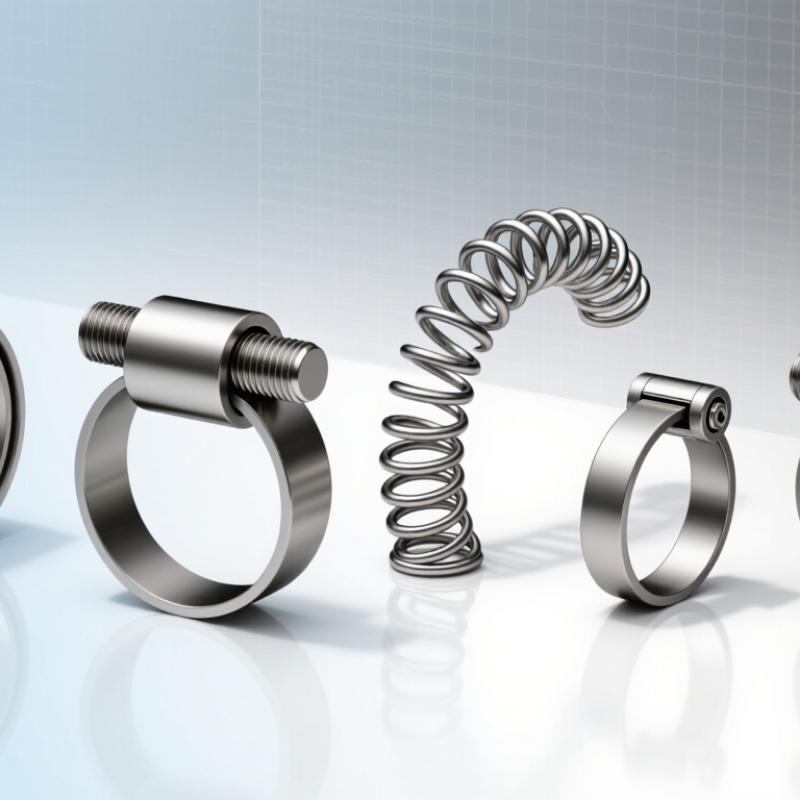
Worm-drive clamps suit general maintenance and low-to-medium pressure connections. T-bolt clamps provide stronger, more even compression for heavy-duty hoses. Spring clamps maintain tension during thermal expansion and contraction. Ear clamps offer a compact, tamper-resistant connection for high-volume assembly. Constant-tension designs can reduce leakage when temperatures change repeatedly.
Before purchasing, measure the hose’s outside diameter after fitting it over the connector. Do not rely on the hose label alone. Check the clamp’s adjustment range, band width, material, and recommended torque. Stainless steel helps resist moisture and chemical exposure, but grades differ in performance. A wider band usually spreads pressure more evenly.
In field inspections, I have seen leaks caused by over-tightening rather than weak clamps. The hose wall was cut beneath the band. That was an expensive lesson. Under-tightening can also leave a hidden leakage path. For global applications, buyers should consider transport vibration, local climate, installation tools, and replacement availability. Packaging should protect threads and band edges from damage. Documentation matters too. Clear sizing charts and torque guidance improve consistency between factories and service teams. Even experienced technicians should recheck fit after the first pressure cycle.
Major Hose Clamp Types and How They Differ
2026 Top Hose Clamp Types for Global Buyers
Major hose clamp types differ in pressure control, vibration resistance, installation speed, and corrosion performance. Worm-drive clamps offer adjustable diameter and easy field servicing. They suit many low- and medium-pressure connections, but uneven tightening can damage soft hose walls. T-bolt clamps provide stronger, more uniform loading. They are better for high-pressure lines, turbo systems, and severe vibration. Spring clamps maintain tension during thermal cycling, although their removal can be awkward in confined spaces.
Ear clamps create a compact, tamper-resistant seal after crimping. They work well in mass production, but replacement requires a new clamp in many cases. Constant-tension clamps are useful where temperature changes repeatedly expand and contract the hose. For coastal or chemical environments, stainless steel selection matters. The AMPP IMPACT study estimated global corrosion costs at 2.5 trillion US dollars annually, equal to about 3.4% of global GDP. That figure makes material choice more than a cosmetic decision. SAE J1508 and DIN 3017 also provide useful references for clamp design and testing. Standards help, but they cannot replace application testing.
Tips: Match the clamp to hose hardness, outside diameter, pressure, and temperature. Measure the installed hose, not the loose hose. Apply controlled torque. I have seen failures caused by over-tightening, not weak clamps. Check for hose extrusion after testing. A perfect selection is rare; vibration, salt spray, and assembly skill can still expose a poor assumption.
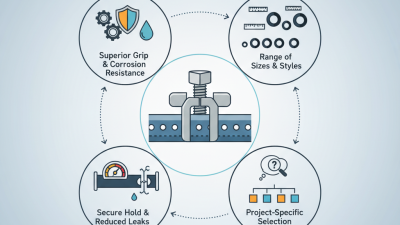
The chart compares representative nominal hose-size ranges commonly offered across major clamp types. Worm-drive and T-bolt clamps provide broad size coverage and adjustable fastening, while spring and ear clamps are typically selected for compact, application-specific connections. Actual ranges vary by construction, material, and supplier specification.
Key Materials, Sizes, and Performance Specifications
2026 Top Hose Clamp Types for Global Buyers
Key Materials, Sizes, and Performance Specifications
Hose clamps secure tubing against pressure, vibration, and temperature changes. Common types include worm-drive, T-bolt, constant-tension, and ear clamps. Each design fits a different service condition. Worm-drive clamps suit general maintenance and adjustable installations. T-bolt clamps provide stronger, more even compression on large hoses. Constant-tension models help manage thermal expansion. Ear clamps offer compact, tamper-resistant connections.
Material selection deserves careful attention. Stainless steel 304 handles moisture and ordinary outdoor exposure well. Stainless steel 316 performs better near saltwater, chemicals, and persistent humidity. Galvanized carbon steel can reduce cost, but damaged coatings may invite corrosion. Aluminum clamps are lightweight, yet they may deform under excessive tightening. Material compatibility matters.
Diameter comes next. Measure the hose over its fitting, not across an unused hose. Measure twice. Select a clamp whose working range places the target diameter near its middle. Typical band widths include 8, 10, and 12 millimeters. Larger assemblies may require wider bands or T-bolt designs. Check tightening torque, operating temperature, pressure rating, and vibration resistance together. One strong-looking clamp is not automatically reliable. Over-tightening can cut soft rubber and create a hidden leak. Under-tightening can allow the hose to creep.
Field inspections often reveal a practical mistake: buyers compare diameter but ignore band edges. Sharp edges can damage silicone or thin-wall tubing. Smooth, rounded bands are safer for delicate hoses. Specifications should be verified against the actual hose compound, fitting shape, and service environment. Supplier data is useful, but physical trial fitting remains necessary. Conditions change.
How to Select the Right Hose Clamp for Each Use
2026 Top Hose Clamp Types for Global Buyers
How to Select the Right Hose Clamp for Each Use
Choosing a hose clamp starts with the hose, not the clamp box. Measure the hose outside diameter after fitting it over the connector. Allow enough adjustment for temperature changes and material movement. Nominal size alone can mislead.
Worm-drive clamps suit many low- and medium-pressure connections. Their slotted bands allow quick adjustment with common tools. For heavy-duty machinery, T-bolt clamps provide stronger, more even loading around thick hoses. Spring clamps work well where temperatures change repeatedly. They maintain tension as rubber expands and contracts. Ear clamps offer a compact, tamper-resistant fit, but installation requires careful positioning and the correct crimping tool.
Material selection matters too. Stainless steel helps resist moisture, cleaning chemicals, and outdoor exposure. Plated steel may fit dry indoor equipment, but surface damage can shorten its service life. Check the band edge before installation. A sharp edge can cut a soft hose.
Do not overtighten. I have seen a firm-looking connection hide a crushed hose underneath. Tightening torque should follow the clamp design and hose supplier’s guidance. Inspect the joint after the system reaches operating temperature. Small leaks often appear only then. In practice, access also matters; the strongest clamp is useless if a technician cannot install or inspect it safely.