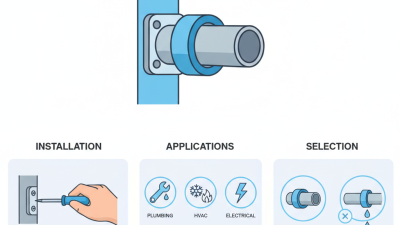
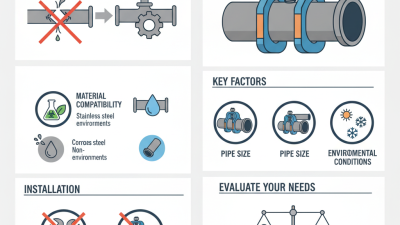
7 Tips for Choosing the Right Pipe Clamp Holder
Choosing the right Pipe Clamp Holder affects safety, alignment, maintenance, and the service life of an entire piping system. It is not merely a small hardware decision.
Grand View Research reports continued growth in industrial pipe-support demand, driven by energy, chemical, water, and infrastructure projects. MarketsandMarkets also identifies corrosion resistance, load capacity, and installation efficiency as important selection factors. These findings support a practical point: clamp choice should follow operating conditions, not appearance.
Roy A. Parisher, author of Pipe Drafting and Design, offers a useful engineering principle: “Support the pipe for its operating condition, not only its empty weight.” That advice remains relevant when selecting a Pipe Clamp Holder for hot lines, vibrating equipment, or outdoor installations. A holder that looks strong may still fail under thermal movement or concentrated loading.
Check the pipe diameter first. Then examine material compatibility, insulation thickness, expected temperature, vibration, and working load. Stainless steel may suit corrosive areas, while galvanized steel can offer economical protection in milder environments. Small details matter. A sharp edge can damage insulation. Excessive tightening can deform thin-wall pipe.
ASME B31.1, ASME B31.3, and MSS SP-58 provide valuable guidance for piping supports and materials. However, standards do not replace site judgment. Real installations are rarely perfect. Missing drawings, uncertain loads, and uneven surfaces can complicate selection.
These seven tips connect published guidance with practical inspection habits. They also encourage one honest question: will this Pipe Clamp Holder still perform after years of heat, movement, moisture, and maintenance?
Understanding Pipe Clamp Holder Types and Their Applications
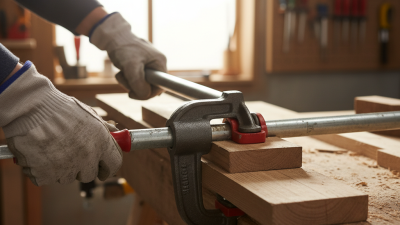
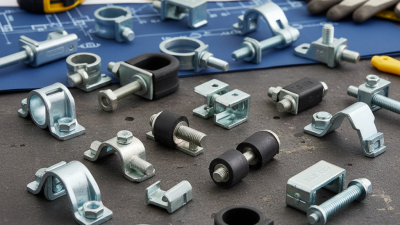
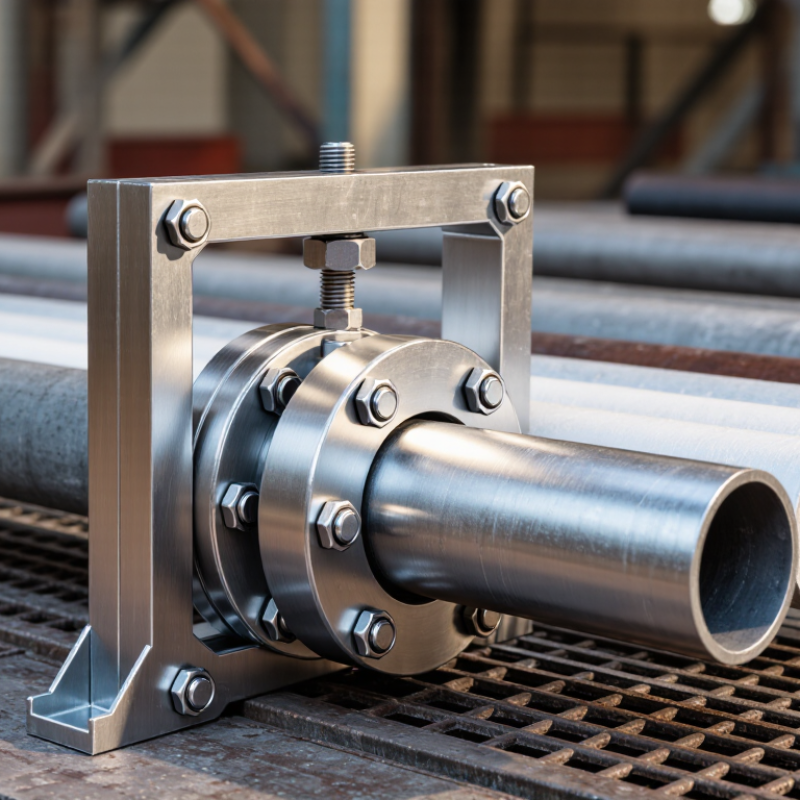
Choosing a pipe clamp holder starts with identifying its actual job. A storage holder keeps clamps organized in a workshop. A support clamp secures a pipe to a wall, ceiling, or frame. These products are not interchangeable. Choose a screw-style holder for steady positioning during fabrication. Use a quick-release design when pipes must be removed often. For permanent installations, split-ring clamps and U-bolt holders usually provide stronger restraint.
Check the pipe diameter before comparing materials. A holder that fits loosely may allow vibration, while an overly tight one can damage the surface. Cushioned inserts suit painted, coated, or softer pipes. Bare metal holders work better in dry indoor areas. Stainless or corrosion-resistant construction is more suitable near moisture, chemicals, or outdoor equipment. Consider the mounting surface too. Concrete, timber, and steel may require different anchors or brackets.
Load rating deserves careful attention. It should cover the pipe, fluid, insulation, and movement during operation. I once underestimated insulation thickness, and the selected holder became unusable. That mistake was simple but avoidable. Measure twice. For vibrating systems, choose a holder with firm contact and some controlled flexibility. For crowded maintenance areas, select an accessible release mechanism. Inspect fasteners and cushioning during regular service. A holder can look secure while its insert quietly hardens, cracks, or slips.
7 Tips for Choosing the Right Pipe Clamp Holder
Understanding pipe clamp holder types and their applications
The chart compares representative nominal pipe diameter ranges commonly associated with major pipe clamp holder types. When selecting a holder, also check material compatibility, load capacity, vibration control, corrosion resistance, installation access, temperature conditions, and local plumbing or mechanical standards.
Assessing Pipe Size, Weight, and Load-Bearing Requirements
Choosing the right pipe clamp holder starts with measured pipe size, not visual judgment. ASME B36.10M lists a 2-inch Schedule 40 steel pipe at about 3.65 pounds per foot. A 6-inch equivalent weighs nearly 19 pounds per foot. That difference changes the clamp, holder, and support spacing significantly.
Add the contents. Water adds approximately 2 pounds per foot inside a 2-inch pipe, but about 15 pounds inside a 6-inch pipe. Insulation, valves, flanges, vibration, and thermal movement increase the working load. MSS SP-58 provides recognized guidance for pipe supports, while ASME B31.1 addresses support design in power piping systems. Use their requirements with the project engineer’s calculations, rather than relying on a catalog rating alone.
Check the holder’s safe working load, bolt size, material, and attachment surface. A clamp rated for static weight may perform poorly under vibration or repeated temperature changes. I have seen installations fail because the pipe diameter was correct, but the loaded weight was underestimated. That mistake is easy to repeat. Calculate the total load per support, then apply the specified safety factor. Inspect for corrosion and uneven contact, too. Small gaps can become serious movement points. Load data should be recorded before installation and reviewed after testing.
Choosing Suitable Materials for Strength and Corrosion Resistance
7 Tips for Choosing the Right Pipe Clamp Holder
Choosing Suitable Materials for Strength and Corrosion Resistance
Material selection decides whether a pipe clamp holder remains secure after years of moisture, vibration, and temperature changes. In field inspections, I check rust around welds, bolt threads, and drainage points first. Small crevices often fail before visible surfaces.
The AMPP IMPACT study estimated global corrosion costs at about $2.5 trillion annually, equal to 3.4% of global GDP. It also reported that 15% to 35% of corrosion costs could be avoided through better practices. These figures make material choice more than a purchasing detail. Carbon steel offers strong load support, but protective coatings can be damaged during installation. Stainless steel performs better in wet or chemically exposed areas. However, “stainless” is not automatically suitable.
Choose grades according to the environment, not habit. A 304 stainless holder may suit indoor water piping, while 316 stainless provides stronger resistance near chlorides. Galvanized steel can work outdoors when the zinc layer remains intact. Polymer holders resist many chemicals, yet ultraviolet exposure and heat may reduce their strength. Check temperature, humidity, chemical contact, and expected load together.
ASTM B117 salt-spray results can compare coatings, but they do not predict exact outdoor service life. That limitation matters. I would also inspect coating damage after cutting or drilling, because exposed edges can become early corrosion sites. A practical mistake is selecting the strongest material without checking contact compatibility. Dissimilar metals may accelerate galvanic corrosion, especially in damp joints. Review the manufacturer’s load data, installation torque, and relevant material standards before approval.
7 Tips for Choosing the Right Pipe Clamp Holder - Choosing Suitable Materials for Strength and Corrosion Resistance
Typical material properties are approximate ranges for common engineering grades. Actual performance depends on grade, heat treatment, surface condition, loading, temperature, and installation environment.
| Material Option |
Typical Tensile Strength |
Corrosion Resistance |
Approx. Service Temperature |
Best-Suited Environment |
Relative Cost |
Selection Guidance |
| Carbon Steel |
400–550 MPa |
Low without coating; moderate with galvanizing or paint |
Approximately −20 to 400°C |
Indoor, dry, or controlled industrial areas |
Low |
A practical choice when high corrosion exposure is not expected and a protective finish can be maintained. |
| Hot-Dip Galvanized Steel |
400–550 MPa |
Moderate to high; zinc coating provides sacrificial protection |
Approximately −20 to 200°C |
Outdoor general service and moderately humid areas |
Low to medium |
Select when a cost-effective steel clamp holder needs better atmospheric corrosion protection. |
| 304 Stainless Steel |
515–750 MPa |
High in normal atmospheric and mildly corrosive conditions |
Approximately −196 to 800°C, depending on load and design |
Indoor, outdoor, food-processing, and general industrial areas |
Medium |
A balanced option for strength, cleanliness, and broad corrosion resistance. |
| 316 Stainless Steel |
515–750 MPa |
Very high; improved resistance to chlorides and many chemicals |
Approximately −196 to 800°C, depending on load and design |
Coastal, marine, chemical, and high-humidity environments |
Medium to high |
Preferable where salt spray, chloride exposure, or frequent washdown could cause pitting. |
| Aluminum Alloy |
200–310 MPa |
High in many atmospheric conditions; vulnerable to galvanic contact with some metals |
Approximately −50 to 150°C |
Lightweight structures and areas where easy handling is important |
Medium |
Use when low weight matters; isolate it from dissimilar metals to reduce galvanic corrosion. |
| Glass-Filled Nylon |
70–170 MPa |
Excellent against rust; chemical resistance varies by formulation |
Approximately −40 to 120°C |
Electrical isolation, light-duty systems, and wet indoor locations |
Medium |
Choose for electrical insulation and low weight, but verify creep, moisture absorption, and long-term load capacity. |
| EPDM Rubber |
7–20 MPa |
Excellent against water, ozone, and weathering; limited resistance to oils and fuels |
Approximately −50 to 150°C |
Vibration isolation, pipe cushioning, and outdoor weather exposure |
Low to medium |
Use as a liner or insert to reduce vibration, noise, and metal-to-metal contact rather than as the main load-bearing frame. |
Seven Selection Tips:
- Match the material strength to the pipe weight, operating loads, and safety factor.
- Consider chloride, salt spray, chemicals, humidity, and cleaning agents before selecting the finish.
- Check the complete temperature range, including start-up, shutdown, and occasional heat exposure.
- Use liners or inserts when vibration isolation, noise reduction, or surface protection is required.
- Prevent galvanic corrosion by isolating dissimilar metals with suitable washers, sleeves, or coatings.
- Verify clamp dimensions, pipe outside diameter, fastener compatibility, and installation clearance.
- Confirm long-term durability, inspection requirements, and applicable engineering or safety standards.
Comparing Safety Features, Durability, and Overall Value
7 Tips for Choosing the Right Pipe Clamp Holder
Comparing Safety Features, Durability, and Overall Value
A reliable pipe clamp holder should resist movement, not merely support weight. Check the rated load against the pipe, insulation, fluid, and vibration. Leave a safety margin. Tip one: choose a holder with a clearly stated working-load limit. Tip two: inspect locking pins, threads, and contact surfaces. Sharp edges can damage coatings or insulation. Tip three: select corrosion-resistant steel for damp mechanical rooms. Galvanized finishes help, but they are not magic. Tip four: confirm compatibility with the pipe diameter and support spacing. MSS SP-58 provides recognized guidance for pipe hangers and supports.
Safety deserves more than a quick visual check. The U.S. Bureau of Labor Statistics reported 2.4 recordable injury and illness cases per 100 full-time workers in private industry during 2023. That figure does not prove a clamp caused an injury, but it supports stricter inspection habits. Tip five: prefer designs that prevent accidental release. Tip six: verify that installation tools can reach every fastener. A secure part is useless when workers cannot tighten it correctly.
Durability affects overall value more than the purchase price. Compare coating quality, replaceable parts, load ratings, and supplier documentation. Tip seven: calculate lifecycle cost, including inspections and replacement labor. A cheaper holder may loosen after repeated vibration. That mistake is easy to underestimate. In my own checklist, I would also record torque, corrosion, and alignment during installation. It takes minutes. Missing one detail can cost much more later.