Leave Your Message
Choosing reliable Pipe Support Brackets manufacturers requires more than comparing prices or catalog photographs. These components carry weight, control movement, and protect connected equipment under vibration and thermal expansion. A small bracket beside a steam line may experience heat, cyclic loading, moisture, and corrosive chemicals every day. Details matter.
George Antaki, a recognized piping and structural engineering authority, explains, “A pipe support is a boundary condition, not merely a piece of steel.” This principle helps frame the manufacturers reviewed in China Top 10 Pipe Support Brackets Manufacturers. Their capabilities should be examined through material selection, load ratings, welding quality, dimensional control, surface treatment, and testing records. Stainless steel, carbon steel, galvanized finishes, and customized assemblies may serve very different environments. A bracket suitable for a dry utility room may fail prematurely near a coastal process plant.
The list also considers production experience, engineering support, certification practices, export reliability, and installation feedback. Clear drawings and traceable inspection documents matter. So does communication when a project changes unexpectedly. A polished catalog can still hide weak field performance. This guide cannot replace project-specific stress analysis or site verification. It can, however, create a practical starting point for buyers, contractors, and engineers. Fit matters. Tolerance matters. Markets change. Some evaluations may remain imperfect because public manufacturer data is often incomplete. Readers should confirm current specifications, testing scope, and compliance requirements before placing an order. Reliable Pipe Support Brackets are selected through evidence, not attractive claims alone.
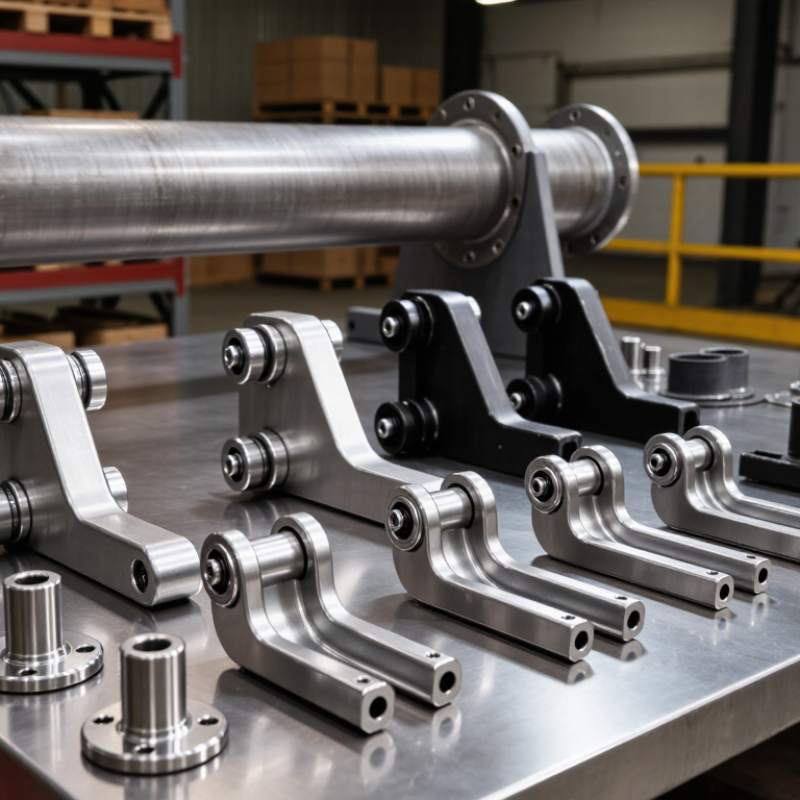
China Top 10 Pipe Support Brackets Manufacturers
Definition and Role of Pipe Support Brackets
Pipe support brackets are mechanical components that hold, guide, or anchor pipelines. They transfer pipe weight, fluid loads, vibration, and thermal movement into steelwork or concrete. Typical designs include clamps, shoes, guides, anchors, and spring supports. Small components can carry serious loads.
MSS SP-58 classifies pipe supports by their function and installation requirements. ASME B31.3 also evaluates sustained, occasional, and displacement stresses in process piping. These references guide spacing, load selection, material choice, and inspection practices. A correctly selected bracket reduces sagging and limits stress at valves, flanges, and welded joints. It also helps maintain drainage and insulation clearance.
In field applications, engineers check operating weight, test weight, wind, seismic forces, and thermal expansion. A bracket may appear oversized but still fail because its anchor is weak. That is an easy mistake. Poor alignment can create rubbing, noise, and fatigue after repeated temperature cycles. The U.S. Department of Energy identifies vibration and inefficient mechanical design as common causes of industrial energy loss. Therefore, support brackets should be reviewed with the complete piping system, not as isolated metal parts. Practical inspections should record corrosion, loose fasteners, damaged coatings, and unexpected pipe movement. Drawings are useful, but site conditions are often less tidy.
Definition: Pipe support brackets are structural components used to carry, guide, anchor, or stabilize piping systems while controlling movement caused by operating loads, vibration, thermal expansion, and the weight of pipes and contents.
Role: Properly selected brackets help maintain pipe alignment, reduce stress on connected equipment, improve safety, and extend the service life of industrial, commercial, and utility piping systems.
| Rank | Anonymized Manufacturer Profile | Main Bracket Types | Typical Materials | Surface Protection | Typical Pipe Size | Typical Working Load | Typical Temperature Range | Primary Applications | Main Support Role |
|---|---|---|---|---|---|---|---|---|---|
| 1 | Profile A – Heavy Industrial Fabrication | Welded shoes, pipe saddles, beam clamps, anchor brackets | Carbon steel, stainless steel, low-temperature steel | Hot-dip galvanizing, painting, epoxy coating | DN15–DN1200 | 0.5–50 kN | −40°C to 400°C | Petrochemical plants, power stations, steelworks | Carries heavy vertical loads and limits pipe displacement |
| 2 | Profile B – Modular Support Systems | Strut brackets, channel supports, adjustable clamps | Pre-galvanized steel, stainless steel, ductile iron | Pre-galvanized, electro-galvanized, passivated | DN15–DN300 | 0.2–12 kN | −30°C to 250°C | Commercial buildings, HVAC, plumbing, mechanical rooms | Provides fast, adjustable installation for service pipework |
| 3 | Profile C – Seismic and Vibration Control | Seismic sway braces, lateral restraints, anti-vibration brackets | Carbon steel, stainless steel, elastomer-lined steel | Zinc plating, hot-dip galvanizing, powder coating | DN20–DN400 | 1–25 kN | −20°C to 200°C | Hospitals, data centers, public buildings, industrial facilities | Controls lateral movement, impact, and vibration |
| 4 | Profile D – Stainless and Corrosion-Resistant Components | Stainless pipe clamps, hygienic brackets, wall supports | 304 stainless steel, 316 stainless steel | Mechanical polishing, passivation, electropolishing | DN10–DN250 | 0.1–10 kN | −50°C to 300°C | Food processing, pharmaceutical, marine, water treatment | Supports hygienic or corrosive-service piping |
| 5 | Profile E – Thermal Movement Solutions | Guides, sliding shoes, expansion supports, PTFE-lined supports | Carbon steel, stainless steel, PTFE, graphite composites | Painting, galvanizing, high-temperature coating | DN25–DN1000 | 1–40 kN | −80°C to 550°C | Steam, hot oil, chemical processing, energy systems | Allows controlled axial movement while maintaining alignment |
| 6 | Profile F – Spring and Variable Load Supports | Variable spring hangers, constant supports, rod hangers | Carbon steel, alloy steel, stainless steel | Painted, galvanized, specialized high-temperature finishes | DN50–DN800 | 2–100 kN | −40°C to 500°C | Power generation, refineries, large process plants | Maintains support force as the pipe moves vertically |
| 7 | Profile G – Plumbing and HVAC Brackets | Clevis hangers, split-ring hangers, trapeze brackets | Carbon steel, malleable iron, stainless steel | Electro-galvanized, pre-galvanized, powder coated | DN15–DN200 | 0.1–8 kN | −20°C to 150°C | Water supply, drainage, chilled water, air-conditioning systems | Provides economical suspension and pipe spacing control |
| 8 | Profile H – Customized Engineering Supports | Fabricated frames, multi-pipe racks, equipment supports | Carbon steel, stainless steel, structural alloy steel | Galvanizing, epoxy paint, polyurethane coating | DN25–DN1500 | 2–150 kN | Project-specific | Industrial skids, utility corridors, modular construction | Integrates several lines or unusual structural connection points |
| 9 | Profile I – Fire Protection Supports | Seismic hangers, brace fittings, sprinkler pipe brackets | Carbon steel, ductile iron, stainless steel | Electro-galvanized, hot-dip galvanized, red powder coating | DN25–DN300 | 0.5–20 kN | −20°C to 120°C | Fire sprinkler networks, warehouses, commercial buildings | Secures fire piping and resists movement during seismic events |
| 10 | Profile J – Infrastructure and Utility Supports | Bridge clamps, tunnel brackets, buried-pipe supports | Carbon steel, ductile iron, stainless steel, reinforced polymer components | Hot-dip galvanizing, fusion-bonded epoxy, bituminous coating | DN50–DN1200 | 1–80 kN | −40°C to 250°C | Waterworks, tunnels, bridges, district-energy networks | Supports large-diameter lines in demanding outdoor environments |