What are Pipe Holders and How Do They Work?
Pipe holders play a crucial role in various industries, ensuring piping systems are secure and functional. John Smith, a renowned expert in pipe support solutions, once stated, “Proper pipe support can prevent significant damages.” This highlights the importance of well-designed pipe holders.
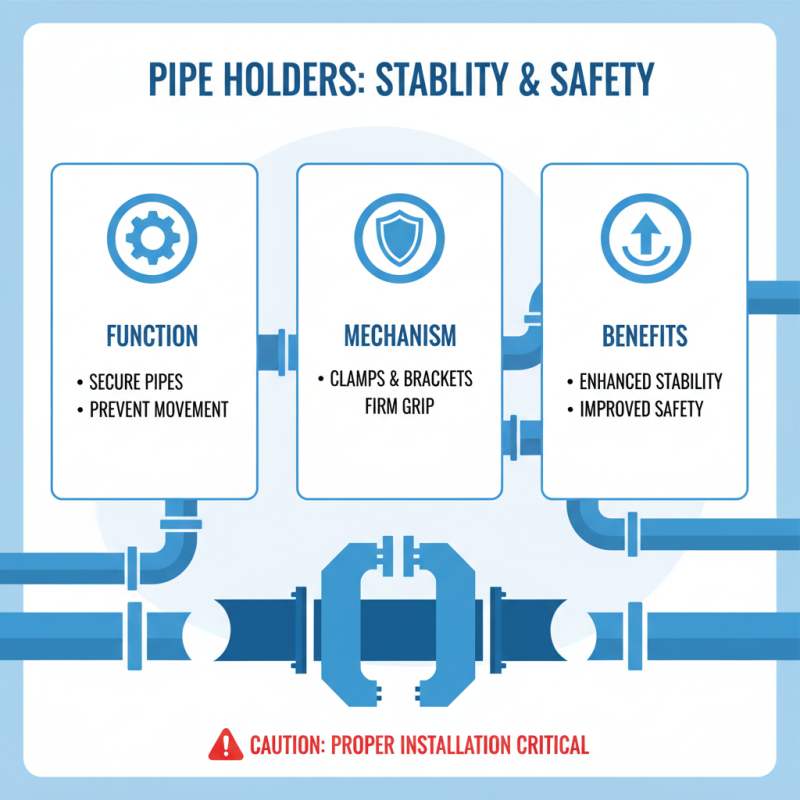
Pipe holders come in different designs and materials, catering to specific needs in construction and manufacturing. They are essential for stabilizing pipes, preventing movement, and reducing strain. A good pipe holder not only enhances safety but also ensures longevity. However, many organizations overlook their significance, leading to preventable failures and inefficiencies.
Understanding how pipe holders work can improve system performance. They influence the flow and pressure within pipes, affecting overall output. Reflection on past installations often shows that neglecting this aspect invites problems. Thus, investing time in selecting appropriate pipe holders can save resources in the long run, making this topic worth exploring further.
Definition of Pipe Holders and Their Purpose
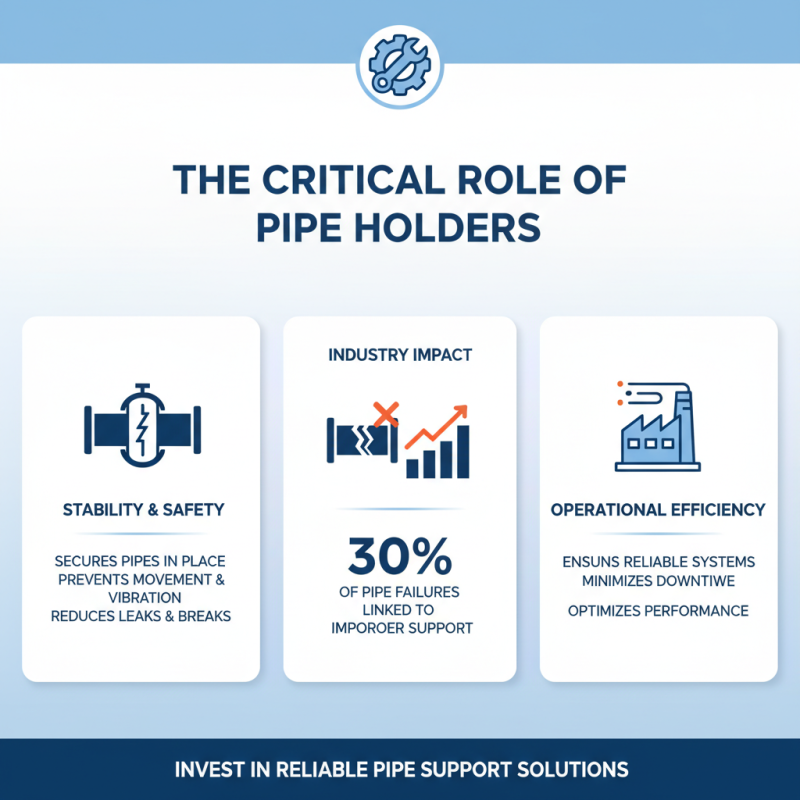
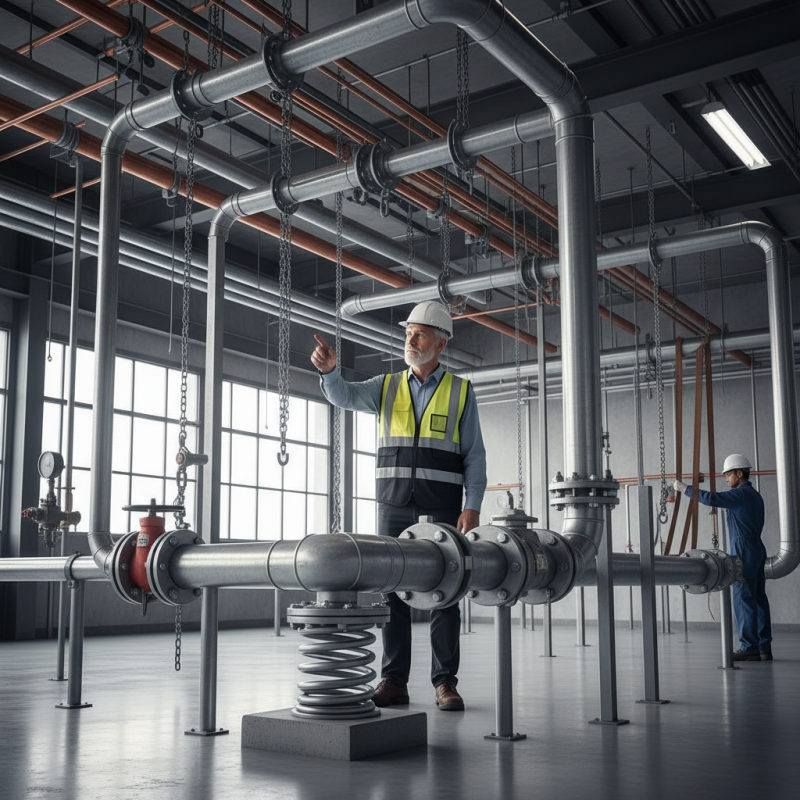
Pipe holders are essential tools in various industries, providing critical support and organization. They secure pipes in place, preventing movement during operation. This stability reduces the risk of leaks and breaks. According to a recent industry report, up to 30% of pipe failures are linked to improper support systems. This highlights the significance of having reliable pipe holders.
Their design often includes adjustable features, allowing for flexibility in installation. Some holders are made from durable materials, ensuring long-term functionality. However, not all designs are perfect. Occasionally, pipe holders may lack adequate strength or adjustability. Users must carefully evaluate their selection based on specific needs. Interestingly, many professionals underestimate the influence of pipe support on system efficiency. A study showed that enhanced support could lead to a 15% increase in overall system performance.
Effective pipe holders also streamline maintenance tasks. By keeping pipes organized, they reduce clutter in workspaces. This visual clarity can lead to faster repairs. Nonetheless, improper installation remains a common oversight. Workers sometimes rush through this task, risking future complications. Awareness of proper techniques and adaptation to unique environments is vital for improving system reliability.
Types of Pipe Holders: Materials and Designs
Pipe holders are essential tools used in various industries. They come in different materials and designs tailored to specific needs. Understanding these types can help in choosing the right pipe holder for your project.
Metal pipe holders are sturdy and durable. They usually resist high temperatures and heavy loads. Stainless steel is common for its strength and corrosion resistance. In contrast, plastic pipe holders are lightweight and more affordable. They are often used for lighter applications. However, they may not withstand extreme conditions.
Design plays a crucial role as well. Some holders clamp pipes tightly, preventing movement. Others allow for quick adjustments, making them versatile when working on installations. Sometimes, choosing the right design can be a trial-and-error process. It’s essential to evaluate which type best suits your needs. Long-term durability is important, but so is ease of use.
Types of Pipe Holders and Their Usage
This bar chart illustrates the percentage usage of different types of pipe holders in various applications. Metal pipe holders are the most commonly used, followed by plastic and wood options. The data provides insight into the materials and designs favored in the industry.
Applications of Pipe Holders in Various Industries
Pipe holders are essential tools used across various industries to secure pipes during installation or transportation. Their applications range widely, influencing both productivity and safety. In construction, for instance, pipe holders provide crucial support, ensuring that pipes remain stable under heavy loads. According to a report from the Construction Industry Institute, improper pipe handling can lead to accidents, costing companies an average of $1 million each year due to delays and safety violations.
In the oil and gas sector, pipe holders help maintain the integrity of pipelines during excavation and installation. A study indicates that nearly 60% of pipeline failures are due to improper handling of materials. Using reliable pipe holders can mitigate these risks significantly. They also assist in minimizing corrosion and wear, factors that can lead to catastrophic failures years down the line.
Pipe holders are not without challenges. Their design must accommodate various pipe sizes and materials. Some holders fail under extreme conditions, reflecting a need for continuous improvement. A recent survey among industrial workers revealed that 45% of respondents experienced frustrations with current pipe support systems. This shows a pressing need for innovation, as many holders can become inadequate over time.
Maintenance and Best Practices for Pipe Holders
Pipe holders are essential tools used in various industries. They secure pipes in place, preventing movement during installation and use. Their proper maintenance is crucial for ensuring long-lasting performance.
Regular inspections are vital. Check for rust, bent parts, or wear. A faulty holder can lead to leaks or accidents. Keep the surfaces clean. Use a soft cloth to remove dust and grime. Lubrication is also important. It reduces friction and helps maintain functionality.
Placement matters too. Ensure holders are installed at appropriate intervals. Too far apart can cause sagging. Bad positioning can lead to uneven stress on pipes. Always follow guidelines for spacing. Reflect on your processes and make adjustments. Consider training for workers. Proper usage ensures safety and efficiency.