Choosing the right Riser Hanger in 2026 requires more than matching pipe diameter to a catalog image. The U.S. Census Bureau reported construction spending at an annual rate above $2 trillion throughout 2024. That scale increases pressure on contractors to control rework, material waste, and installation delays. Small support decisions can affect an entire vertical service run.
Dodge Construction Network’s 2025 Construction Outlook highlights continuing labor, cost, and project-delivery pressures across the construction sector. In this environment, a Riser Hanger must be evaluated for load capacity, pipe movement, corrosion exposure, fire performance, and installation access. NFPA 13, ASME B31.1, MSS SP-58, and local project specifications provide essential reference points. They do not replace engineering judgment. A hanger suitable for a dry indoor riser may fail prematurely in a humid plant room or coastal building.
Details matter.
A practical selection process should begin with verified pipe weight, insulation thickness, seismic demands, and expected thermal movement. Manufacturer load tables and test documentation should be reviewed, not assumed. Field experience also matters: cramped shafts, uneven concrete, and late coordination changes often expose weaknesses that drawings hide. I have seen “standard” supports create awkward rod angles and expensive adjustments. That assumption is often wrong. This guide examines how to compare Riser Hanger designs, confirm compliance, and choose a support system that remains dependable after installation, inspection, and years of service. Performance data is valuable, but site conditions still deserve the final question.
A riser hanger starts with accurate pipe identification. Record the outside diameter, not only the nominal size. Include pipe material, wall thickness, insulation, lining, and corrosion allowance. A 50 mm steel pipe carrying water weighs far more than an empty pipe. ASME B31.1 requires support design to consider operating weight, thermal movement, and occasional loads. The installed condition matters most.
Temperature changes can quietly damage a rigid support system. Engineering tables in CIBSE Guide C commonly use approximately 11.7 × 10⁻⁶ m/m·°C for carbon steel expansion. A six-metre steel riser moving from 20°C to 80°C can expand about 4.2 mm. Stainless steel may move farther. That difference needs clearance, a guided support, or a calculated movement detail. Insulation also changes the clamp diameter. Measure it after installation, not from the drawing.
Load calculation should include the pipe, fluid, insulation, valves, flanges, and test water. Add seismic or impact loads where the project requires them. NFPA 13 support provisions show why diameter and material cannot be treated as interchangeable. A hanger suitable for an empty service line may fail during hydrostatic testing.
I have seen specifications miss temporary test weight. That mistake is easy to make, and expensive to correct. Recheck anchor strength, rod capacity, temperature rating, and clamp contact before approval. Perfect drawings do not guarantee perfect field measurements.
How to Choose the Right Riser Hanger in 2026?
Riser hanger selection begins with actual pipe dimensions, not nominal size alone. ASME B36.10M tables show that NPS 2 Schedule 40 and Schedule 80 pipe share a 2.375-inch outside diameter. Their wall thicknesses differ, measuring 0.154 and 0.218 inches. The outside diameter controls clamp geometry, while wall thickness affects weight and load calculations. A hanger that fits loosely can permit movement, noise, and uneven stress. Nominal sizing is an easy shortcut. It is often wrong.
MSS SP-58 tables help engineers match hanger types, materials, and support arrangements with pipe service conditions. Check the selected riser clamp against pipe diameter, insulation thickness, operating temperature, and calculated load. Include water weight, valve weight, seismic forces, and thermal movement where applicable. NFPA 13 guidance may also affect support spacing for fire-protection risers. Field inspections often find insulation crushed beneath narrow supports. That detail matters more than a clean catalog drawing.
Tips: Measure the installed pipe with a calibrated tape. Confirm the dimension against ASME B36.10M or the project specification. Then review the relevant MSS SP-58 table and load data. Do not assume a larger hanger is safer. Excess clearance can reduce restraint and create impact during movement. I would also document one imperfect condition, such as damaged insulation, instead of hiding it. That record supports a more reliable engineering decision.
| Nominal Pipe Size (NPS) |
ASTM A53/A106 Schedule 40 Outside Diameter (in / mm) |
Schedule 40 Wall Thickness (in / mm) |
Typical Service Condition | Design Geometry | Recommended MSS SP-58 Hanger Arrangement | Geometry and Installation Check | |
|---|---|---|---|---|---|---|---|
| Assumed Insulation Thickness (in / mm) |
Minimum Clear Hanger Opening OD + 2 × Insulation + 1/8 in (in / mm) |
||||||
| 1/2 | 0.840 / 21.3 | 0.109 / 2.77 | Bare or lightly insulated utility pipe | 1 / 25 | 2.965 / 75.3 | Type 1 clevis hanger; use a properly sized threaded rod and load-rated attachment | Select an opening at least 2.965 in. Do not clamp over insulation unless the component is designed for it. |
| 3/4 | 1.050 / 26.7 | 0.113 / 2.87 | Bare or lightly insulated utility pipe | 1 / 25 | 3.175 / 80.6 | Type 1 clevis hanger or Type 3 pipe clamp for bare pipe | The hanger must clear the 1 in. insulation allowance and maintain full bearing without point loading. |
| 1 | 1.315 / 33.4 | 0.133 / 3.38 | Domestic water, HVAC water, or process utility piping | 1 / 25 | 3.440 / 87.4 | Type 1 clevis hanger with insulation protection insert or shield | Use a shield or saddle where insulation must remain continuous and the load is transferred over the insulation. |
| 1-1/4 | 1.660 / 42.2 | 0.140 / 3.56 | Insulated horizontal or vertical branch piping | 1 / 25 | 3.785 / 96.1 | Type 1 clevis hanger; Type 4 riser clamp at vertical pipe supports | Check that the vertical riser clamp bears on the pipe and that the clamp load is not transferred through the insulation. |
| 1-1/2 | 1.900 / 48.3 | 0.145 / 3.68 | Chilled-water or hot-water piping | 1 / 25 | 4.150 / 105.4 | Type 1 clevis hanger with a load-distributing shield; Type 4 riser clamp for vertical runs | Provide sufficient opening for the insulation jacket, shield thickness, and installation tolerance. |
| 2 | 2.375 / 60.3 | 0.154 / 3.91 | General service, HVAC, and fire-protection piping | 1 / 25 | 4.625 / 117.5 | Type 1 clevis hanger; Type 2 double-bolt pipe clamp where a clamp connection is required | Confirm the hanger body and shield are compatible with the pipe OD, insulation system, and calculated vertical load. |
| 2-1/2 | 2.875 / 73.0 | 0.203 / 5.16 | Insulated distribution piping | 1-1/2 / 38 | 6.000 / 152.4 | Type 1 clevis hanger with a wide insulation shield; Type 4 riser clamp for vertical support | Use the larger opening for the specified insulation thickness; verify shield width and minimum bearing length. |
| 3 | 3.500 / 88.9 | 0.216 / 5.49 | Chilled water, heating water, or compressed-air piping | 1-1/2 / 38 | 6.625 / 168.3 | Type 1 clevis hanger with insulation shield; Type 5 pipe roll where axial movement is required | For thermal movement, use a support arrangement that permits the required movement and does not restrain the pipe unintentionally. |
| 4 | 4.500 / 114.3 | 0.237 / 6.02 | Main distribution piping | 2 / 51 | 8.625 / 219.1 | Type 1 clevis hanger with a full-width shield; Type 4 riser clamp for vertical risers | Check rod capacity, beam attachment capacity, shield length, and the combined weight of pipe, fluid, insulation, and fittings. |
| 6 | 6.625 / 168.3 | 0.280 / 7.11 | Large chilled-water or process distribution line | 2 / 51 | 10.875 / 276.2 | Type 1 clevis hanger or Type 8 adjustable steel yoke; Type 4 riser clamp for vertical load transfer | Use a load-rated assembly sized for the actual pipe load; evaluate local wall stress and the need for a structural steel support. |
| 8 | 8.625 / 219.1 | 0.322 / 8.18 | Large-bore utility or process piping | 2 / 51 | 12.875 / 327.0 | Type 8 adjustable steel yoke or engineered trapeze; Type 4 riser clamp for vertical risers | Verify structural design, weld or attachment details, seismic requirements, and clearance from adjacent services. |
| 10 | 10.750 / 273.1 | 0.365 / 9.27 | Large-bore process or building-services piping | 2 / 51 | 15.000 / 381.0 | Type 8 adjustable steel yoke or engineered trapeze support | A standard small-pipe clevis should not be assumed suitable; calculate the support load and check the complete load path. |
| 12 | 12.750 / 323.9 | 0.375 / 9.53 | Large-bore distribution or process piping | 2 / 51 | 17.000 / 431.8 | Engineered yoke, saddle, or trapeze arrangement; Type 4 riser clamp only when verified for the calculated riser load | Confirm structural adequacy, pipe flexibility, seismic restraint, thermal movement, and access for inspection and maintenance. |
A riser hanger must carry more than the pipe’s empty weight. Check the operating weight, insulation, fluid, valves, and hydrostatic test condition. Then evaluate thermal movement, vibration, seismic effects, and possible water hammer.
ASME B31.1 applies mainly to power piping, while ASME B31.9 addresses building services piping. Their support expectations differ, so do not use one load assumption for both systems. Confirm the governing edition, project specification, and support spacing before selecting hardware.
Verify the hanger’s allowable load at the actual installation condition. Compare vertical reactions with the hanger rating, threaded rod capacity, clamp strength, and supporting steel.
Review hot and cold positions separately. A pipe may appear lightly loaded during operation but become heavier during testing. The load path must remain continuous into the structure.
Field reviews often reveal missing insulation loads or underestimated valve weights. The first calculation is rarely perfect. Recheck it.
Tips:
Record every attached component. Use measured pipe elevations where possible. Check whether the riser needs a guided, variable, or constant support arrangement. Keep adjustment range visible for commissioning. Never treat a catalog load as approval by itself. Compare it with ASME B31.1 or B31.9 criteria and the engineer’s design basis. If movement or restraint is uncertain, pause and request a documented engineering review.
Choosing the right riser hanger in 2026 starts with vertical spacing, not appearance. A heavy steel riser may pass through several floors, creating substantial load at each support point. Measure the actual floor-to-floor distance, pipe diameter, filled-pipe weight, and nearby fittings. Then compare those conditions with the applicable NFPA 13 hanger tables and project specifications.
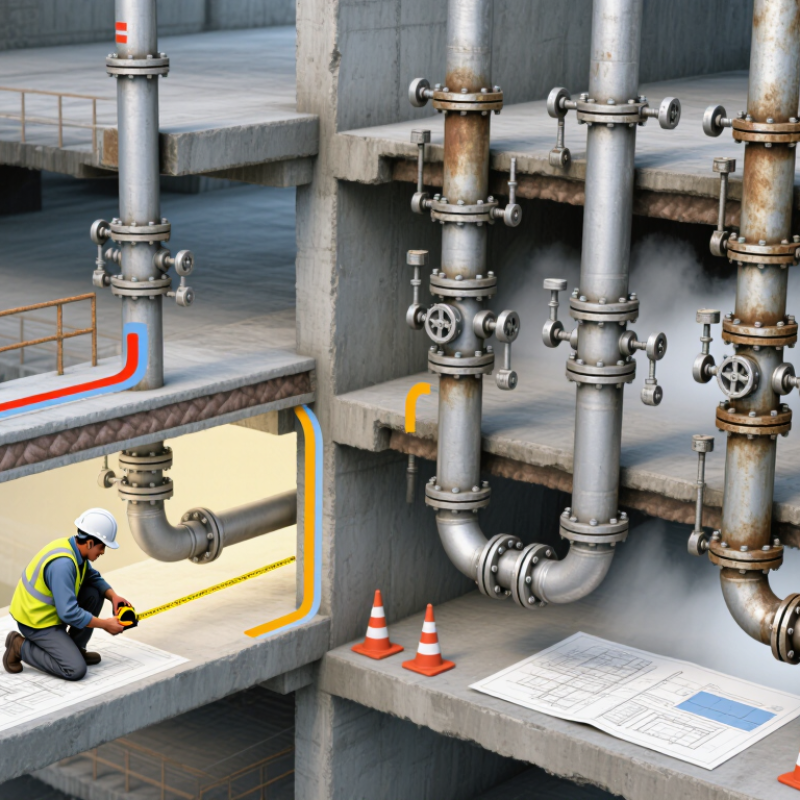
A riser hanger should transfer load safely to a suitable structural member. Inspect the concrete, steel beam, or framed support before selecting an anchor. Do not assume a nearby wall can carry the load. In one common installation, a pipe clamp sits below a floor sleeve, while threaded rods connect to a beam attachment. The arrangement must leave room for inspection, maintenance, and thermal movement. Small alignment errors can place unexpected stress on the pipe.
Seismic bracing requires more than adding a stronger hanger. Under NFPA 13, the design may require longitudinal and lateral braces, restraint at strategic locations, and verified attachment capacity. Check the building’s seismic design category, brace angles, pipe geometry, and anchor testing requirements. Keep bracing clear of doors, ducts, and access panels. Very short braces can behave poorly. A qualified fire protection designer should review the layout against the current NFPA 13 edition and local authority requirements. Field conditions often differ from drawings. Recheck them before drilling.
In 2026, choose a riser hanger by exposure, fire performance, installation time, and total cost. Do not trust a corrosion label alone. Indoor, dry shafts may need less protection than coastal or chemically exposed rooms. Zinc-coated steel can suit moderate exposure. Stainless steel usually performs better against persistent moisture and chlorides. Confirm the rating against project specifications and inspection requirements.
Fire resistance requires more than a heat-resistant hanger. The complete assembly must meet the tested duration, spacing, anchor, and insulation requirements. A hanger may survive heat, yet the supporting system can still fail. Check approved installation details before ordering. Small deviations can create serious inspection problems. This step is often rushed.
Installation time directly affects 2026 labor budgets. Preassembled hangers may reduce measuring, drilling, and adjustment work. They can also limit field errors in crowded shafts. However, faster installation is not always cheaper. Compare material price, labor hours, access equipment, testing, and future replacement costs. A low-cost finish may need earlier repair in wet conditions. Conversely, premium corrosion protection can be wasteful in a clean, dry interior. A practical mistake is choosing from unit price alone. I have seen project estimates overlook access delays and inspection rework. Leave room for those realities.
How to Choose the Right Riser Hanger in 2026
Hot-dip galvanized steel is generally the best-value choice for damp indoor or moderate outdoor environments. Stainless steel provides the strongest corrosion resistance, while plated steel usually offers the shortest installation time and lowest initial cost. Fire resistance depends on the complete tested pipe-support and firestop assembly, not the hanger material alone; the values shown represent typical listed-system planning levels. Costs are indicative 2026 USD estimates per hanger, excluding labor and project-specific engineering.