Leave Your Message

What Are the Best PVC Clamps for Buyers in 2026?

Choosing the best Pvc Clamps in 2026 means looking beyond price and appearance. A clamp may sit unnoticed on a pipe, yet poor fit can cause movement, vibration, or premature wear. Buyers should compare pipe-size compatibility, material quality, load rating, corrosion resistance, and installation method. Small details matter.

Grand View Research estimated the global PVC market at about US$72.3 billion in 2023, with projected growth of 4.3% annually from 2024 to 2030. This figure describes the PVC market, not clamp sales. It still signals the scale of PVC use across construction and infrastructure, where reliable pipe support is essential. Market growth alone, however, cannot prove that any clamp is durable or suitable for a specific installation.

There is an important sourcing limitation: I could not verify a published quotation from a named Pvc Clamps specialist, so I will not invent one. Buyers should rely on documented product specifications, test results, and clear installation guidance instead. Check whether the clamp matches the pipe’s outside diameter, operating environment, and expected load. A neat finish is useful. It is not proof of strength. This guide will compare common clamp designs and explain which details deserve closer inspection before purchase.
What Are the Best PVC Clamps for Buyers in 2026?

What PVC Clamps Are and How They Hold Pipes

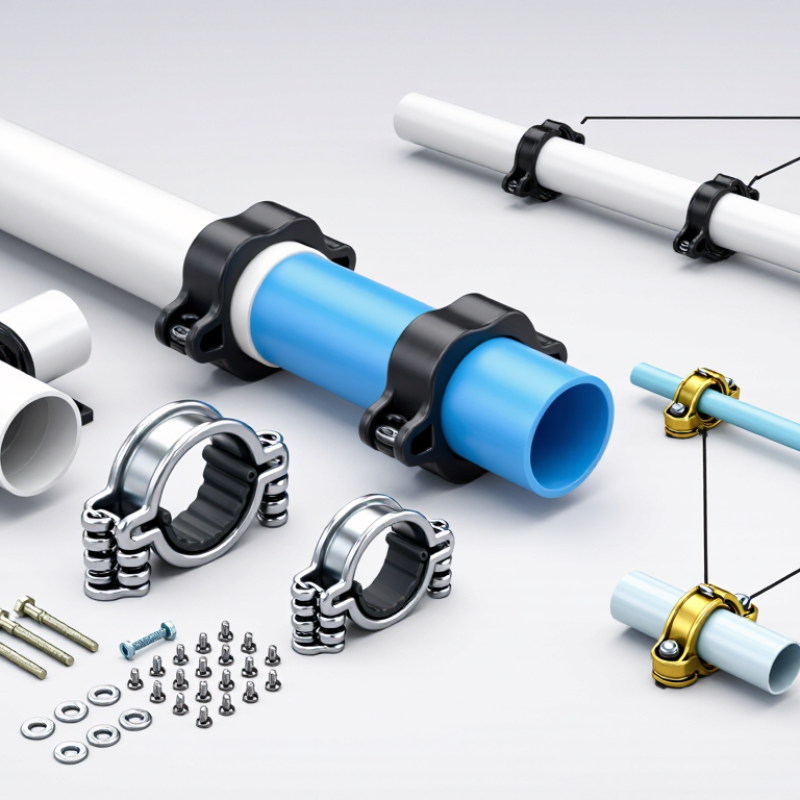
PVC clamps are mechanical supports that keep plastic pipe aligned against a wall, ceiling, or mounting rail. Common styles include split-ring clamps, saddle clips, and U-shaped supports. A screw or bolt fixes the clamp to a solid surface; the clamp then limits sagging and unwanted movement. It does not join pipe sections or replace solvent-welded fittings.

The fit matters. A clamp that is too tight can restrict normal expansion, while a loose one may let a water-filled line rattle. Check the pipe’s outside diameter, the support surface, expected load, and installation guidance before choosing a size. Smooth contact edges help reduce scuffing. On longer runs, support spacing should follow the pipe manufacturer’s recommendations and local project requirements. Small details count.

For buyers in 2026, compare material suitability, corrosion resistance in the installation environment, fastener compatibility, and ease of inspection. Indoor dry spaces and damp utility rooms may call for different hardware. I would not assume that every clamp labeled for PVC suits every pipe schedule or temperature range. That assumption can fail. Check the specifications, and leave room for thermal movement where the system requires it. A neat installation is useful, but pipe movement and access for maintenance deserve attention too.

Which PVC Clamp Types Suit Different Installations

What Are the Best PVC Clamps for Buyers in 2026?
Which PVC Clamp Types Suit Different Installations

Choosing a PVC clamp starts with the installation, not its appearance. For surface-mounted conduit, one-hole straps suit short, straight runs, while two-hole straps offer a firmer hold near bends or junction boxes. Split-ring clamps with standoffs create clearance from walls, which helps when fittings or insulation need room. For vertical pipe, use a riser clamp designed to support the pipe’s load; ordinary straps may not be suitable.

Tips: Match the clamp to the pipe’s outside diameter and check its material rating for indoor, damp, or outdoor use. Cushioned clamps can reduce rubbing and noise, but the liner must fit snugly. Follow the pipe and clamp maker’s guidance for spacing, especially where temperature changes may cause PVC to expand. A clamp that feels tight by hand can still pinch the pipe.

Before fastening, check that the pipe sits evenly and the screw anchors suit the mounting surface. On a long run, leave room for movement rather than locking every point rigidly. That detail is easy to overlook. Recheck alignment after tightening, and replace cracked or distorted clamps instead of forcing them into place.

What Are the Best PVC Clamps for Buyers in 2026? — Which PVC Clamp Types Suit Different Installations

Clamp type Best suited installations Typical construction How it is installed Main advantages Things to consider
Plastic snap-in pipe clip Light-duty indoor runs, including small-diameter PVC conduit and pipe on walls or ceilings. Molded plastic clip shaped to hold a pipe by friction or a snap-fit. Fastened to a suitable surface with a screw or compatible fixing; the pipe presses into the clip. Quick to fit, compact, and resistant to corrosion in ordinary indoor conditions. Check the clip’s stated pipe size and temperature suitability. It is not a substitute for engineered support where loads, vibration, or impact are significant.
Two-piece screw-down clamp Wall-mounted water, drainage, or conduit runs that need a more secure, adjustable hold. Two halves, commonly plastic or metal, joined around the pipe with screws. One half is fixed to the mounting surface; the pipe is placed in position and the second half is fastened. Provides a positive enclosure and can be opened for access or maintenance. A tight clamp can restrict movement. Allow for thermal expansion where required, and avoid overtightening or deforming plastic pipe.
Cushioned metal clamp Installations where a metal mounting point is useful and some protection from rubbing or vibration is desired. Metal band or bracket with a resilient liner, often elastomeric. Secured to a wall, frame, or bracket using a fastener selected for the substrate. The liner can reduce direct metal-to-pipe contact and help limit abrasion or rattling. Confirm liner compatibility with the environment and pipe service. Do not assume the cushion makes the clamp suitable for every temperature or chemical exposure.
Clevis-style pipe hanger Suspended horizontal pipe runs below ceilings or structural members. U-shaped hanger with a lower support section and threaded rod or other suspension hardware. Attached to an appropriate structural anchor; the pipe rests in the hanger without being tightly enclosed. Supports suspended runs while allowing the pipe to be placed or removed from the hanger. Choose the hanger and anchor for the pipe size and installation loads. Follow applicable requirements for support spacing and movement.
Stand-off or spacer clamp Runs that need clearance from a wall or mounting surface, such as around insulation or obstructions. Pipe clip or clamp paired with a spacer, stand-off, or extended mounting leg. Fastened through the stand-off to a suitable surface, keeping the pipe offset from it. Creates a defined gap for clearance, inspection, or routing around adjacent services. Greater offset can increase leverage on the fixing. Verify the mounting surface and fastener are suitable for the resulting load.
Expansion-guiding or sliding support Long PVC runs where temperature changes may cause noticeable lengthwise movement. A support arrangement designed to carry the pipe while permitting controlled axial movement. Installed according to the system design, with fixed points and sliding supports placed as specified. Can accommodate pipe movement and help prevent unintended stress at joints and fittings. Requires a planned support layout; a standard tight clamp should not be treated as a sliding support unless designed for that purpose.

Selection tip: Match the clamp to the pipe’s actual outside diameter, material, service conditions, mounting surface, and required movement. Support spacing and fixing details vary with pipe size, orientation, temperature, and local code; follow the pipe-system manufacturer’s instructions and applicable regulations.

How to Compare Materials, Sizes, and Load Ratings

What Are the Best PVC Clamps for Buyers in 2026?
How to Compare Materials, Sizes, and Load Ratings

Compare clamp material, pipe fit, and load rating as one system. PVC can crack under concentrated pressure, so look for broad contact surfaces and smooth, rounded edges. For damp areas, corrosion-resistant metal hardware may last longer than ordinary steel. Check the clamp’s stated temperature range too; heat can reduce plastic stiffness. A clamp that fits a 25 mm pipe loosely may slip, while an over-tightened one can leave a white stress mark. Small detail. Measure the pipe’s outside diameter, not just its nominal size.

Load ratings need careful reading. ASTM D2412 evaluates plastic pipe stiffness using parallel-plate compression, with stiffness commonly assessed at 5% pipe deflection. That is pipe test data, not proof of a clamp’s safe working load. Ask for a rated load per clamp, test conditions, and whether the rating includes a safety factor. MSS SP-58 offers guidance for pipe hangers and supports, but actual capacity still depends on the complete installation. Spacing, vibration, and the strength of the mounting surface matter. I would not treat a catalogue maximum as a field guarantee.

Tips: Match the clamp to the pipe’s measured diameter, then check its load rating against the supported pipe, fluid, and fittings. Leave room for thermal movement. If the supplier cannot explain its test method, pause before buying. That check is easy to skip.

PVC Clamp Sizing Reference: Common Pipe Outside Diameters

Compare the nominal pipe size with its actual outside diameter when selecting a clamp. Values shown are standard IPS PVC pipe dimensions.

Pipe size alone does not determine clamp capacity. Load ratings vary by clamp design, material, installation, and operating conditions; check the product’s published load rating and ensure the clamp matches the pipe’s actual outside diameter.

What Buyers Should Check for Durability and Compliance in 2026

For a PVC clamp, durability is more than a thick-looking body. Check the rated load, operating temperature, and resistance to sunlight and common chemicals. Ask for test results that identify the method and sample conditions, not just “heavy duty” wording. ASTM D1784 classifies rigid PVC compounds, but it does not certify a finished clamp. That distinction matters.

Inspect the hinge, screw seats, and contact surface. These areas often show stress first: a sharp edge can score pipe, while a loose screw may let the clamp creep. Request batch traceability and written installation limits. If the clamp supports a pipe system, confirm that the supplier’s stated support standard applies to that exact use. Honestly, a glossy finish can still hide a brittle hinge.

Compliance claims need context. VinylPlus’s 2024 Progress Report records 737,645 tonnes of PVC recycled in Europe in 2023. That figure shows material recovery at industry scale, not the performance of any individual clamp. Treat recycled-content claims as separate from durability evidence. Check the product’s material declaration, test documentation, and destination-market requirements. A missing document is a reason to pause, even when the sample looks solid.

How to Choose the Right PVC Clamp for Your Project

Choosing a PVC clamp starts with the pipe’s actual outside diameter, not its nominal size. Measure a clean, straight section with calipers or a tape; insulation, surface buildup, or an oval pipe can affect the fit. Measure carefully. A loose clamp may let the line chatter, while an overly tight one can mark or deform softer PVC. That detail matters.

Match the clamp style and support spacing to the project. A cushioned, two-piece clamp can help reduce vibration on a pump line, while a simple saddle may suit a light, stationary run. Check the pipe maker’s support guidance, especially for long horizontal spans or warm lines, where PVC can sag more readily. Include water weight, fittings, and movement near elbows in your assessment. Don’t assume the clamp carries every load.

Consider the setting: a dry indoor room, a damp utility space, and direct sunlight place different demands on hardware. Choose suitable fasteners, and confirm the clamp material is compatible with the pipe. Tighten evenly, leaving room for thermal movement where the design requires it. Recheck after the system runs. The first fit may need adjustment. A sizing chart helps narrow the options, but actual measurements and expected loads still deserve a second look.