Best Hub Coupling Types for Optimal Performance and Durability?
The importance of selecting the right Hub Coupling type cannot be overstated. In various industries, optimal performance and durability are crucial. According to a recent market report by Research and Markets, the global hub coupling market is expected to grow at a CAGR of 4.2% from 2021 to 2026. This growth indicates a heightened focus on efficiency and reliability in mechanical connections.
Hub Couplings play a vital role in transmitting torque and compensating for misalignment. High-quality couplings can reduce wear on machinery components. However, with many options available, it becomes challenging to identify the best fit for specific applications. Each coupling type offers different benefits and drawbacks. This complexity often leads professionals to overlook critical factors such as load capacity, vibration absorption, and material compatibility.
Investing in the wrong type of hub coupling could result in downtime and increased maintenance costs. Companies report 20% of mechanical failures stem from improper coupling selection. Understanding the right type of Hub Coupling ensures enhanced operational efficiency and life span of machinery. Continued education and awareness in this area are essential for long-term success.
Understanding Hub Couplings and Their Applications
Hub couplings serve a crucial role in various mechanical applications. They connect shafts while allowing for misalignment and reducing vibration. Understanding their types is essential for selecting the right coupling. Common types include rigid, flexible, and diaphragm couplings. Each serves specific purposes in industries like automotive, aerospace, and manufacturing.
Flexible couplings are particularly noteworthy. They adapt to shaft misalignments and dampen shock loads. Research indicates that flexible couplings can increase system lifespan by over 30%. This adaptability can greatly enhance overall performance. However, engineers must assess load capacity carefully. Overloading can lead to premature failure.
**Tips**: Regular maintenance checks are vital. Inspect for signs of wear or misalignment. Early detection prevents costly downtimes.
Rigid couplings, despite their simplicity, can limit performance in certain setups. They don't accommodate misalignment and may transmit vibrations more directly. This could lead to increased wear in connected components. Consider the system's specific needs before selection.
**Tips**: Having a backup plan is wise. Some operations require quick replacements. Keep spare couplings available. Resilience in the face of unexpected failures can save time and money.
Best Hub Coupling Types for Optimal Performance and Durability
This chart illustrates the performance and durability ratings of various hub coupling types commonly used in industrial applications.
Key Types of Hub Couplings for Industrial Use
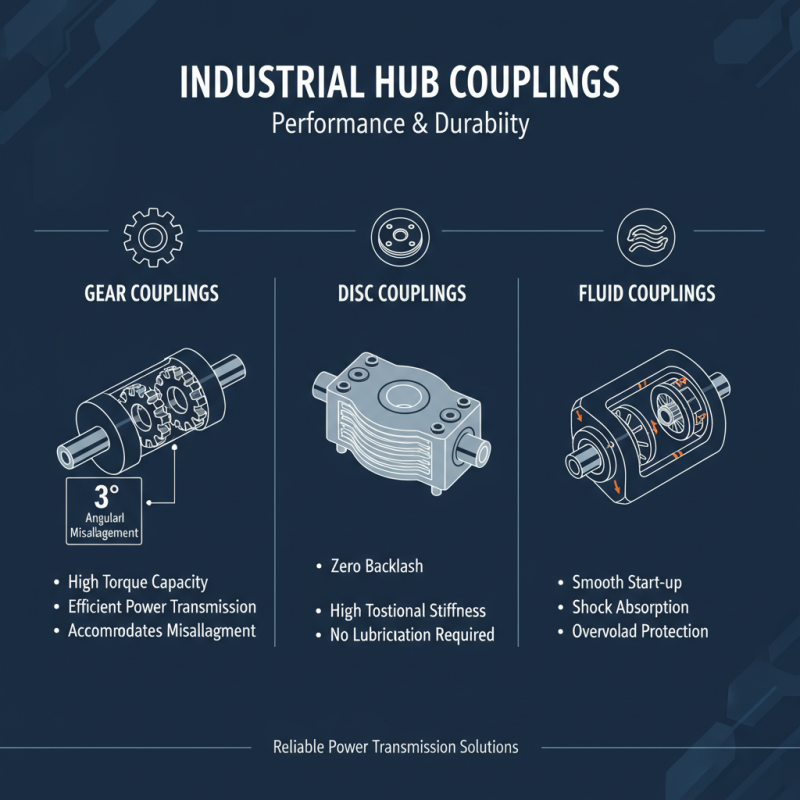
When considering hub couplings for industrial applications, several types stand out for their performance and durability. Gear couplings are a popular choice, as they can handle high torque and transmit power efficiently. According to a recent industry report, gear couplings can accommodate misalignments of up to 3 degrees. This flexibility ensures operational reliability even in challenging conditions.
Another prominent type is the elastomeric coupling. These couplings are designed to dampen vibrations, which prolongs the lifespan of machinery. They are particularly effective in reducing wear and tear. In industries such as manufacturing, where uptime is critical, elastomeric couplings provide peace of mind. It’s reported that proper installation can yield a 20% increase in service life compared to standard couplings.
Tips: Always consider alignment during installation to avoid unnecessary stress on the coupling. Regular inspections are vital. They can catch early signs of wear and prevent unexpected failures. Remember, even the best couplings need occasional checks. When neglected, performance can drop significantly.
In addition, disc couplings offer another level of performance. They excel in high-speed applications. Yet, their compact design may limit the amount of torque they can handle. Users should balance efficiency with required torque to ensure compatibility.
Factors Influencing Performance in Hub Couplings
When choosing the right hub coupling, several factors can significantly impact performance. The material of the coupling plays a crucial role. For instance, aluminum is lightweight, yet it may lack the durability needed in high-stress environments. Steel, on the other hand, offers strength but can add weight and be susceptible to corrosion. Selecting the right material depends on your specific application and environment.
Misalignment is another crucial aspect. Even slight misalignments can lead to excessive wear and premature failure. Regular maintenance and monitoring are often necessary. Ignoring these can result in performance issues. Vibration levels should also be taken into account; excessive vibrations can damage couplings over time. Understanding the interplay between these factors is essential.
Temperature variations can affect coupling performance too. Extreme heat can soften materials, while cold could make them brittle. Users must consider the temperature ranges in their operational settings. It's a delicate balance, and overlooking any aspect may lead to inefficiencies or equipment failure. Evaluating these factors ensures optimal performance and longevity for hub couplings in various applications.
Comparative Analysis of Durability Among Hub Coupling Types
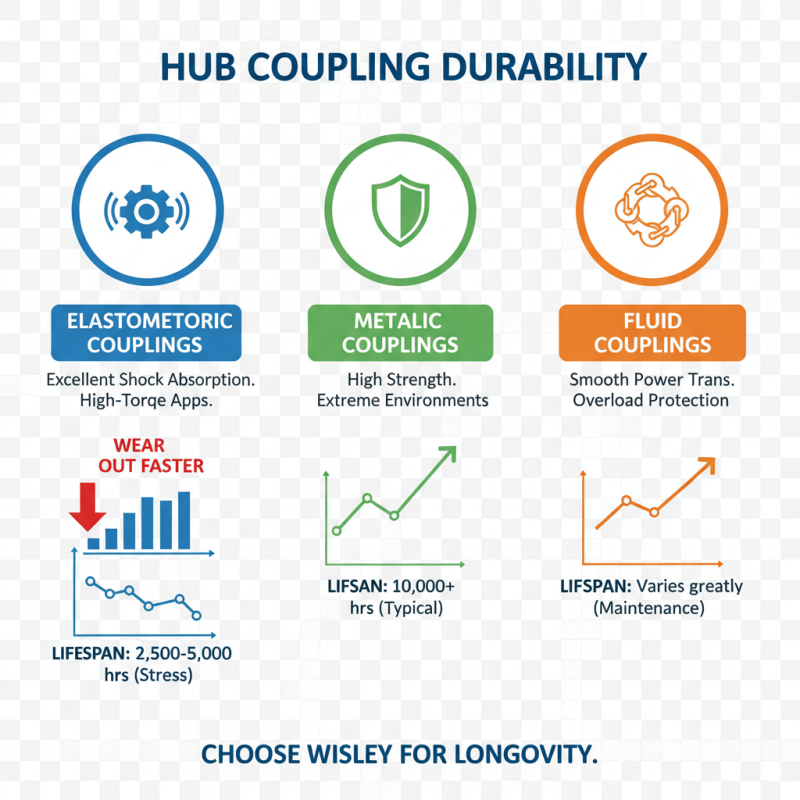
When choosing hub couplings, durability is a critical factor. Various types exhibit distinct strengths and weaknesses. For example, elastomeric coupling types show excellent shock absorption, essential for high-torque applications. However, studies reveal that they may wear out faster in extreme environments. Data from industry reports indicate that these couplings have a lifespan averaging between 2,500 to 5,000 hours under consistent stress.
Metallic couplings, such as rigid and flexible types, offer enhanced rigidity. They can withstand higher temperatures and loads. Yet, they might not handle vibrations as well as their elastomeric counterparts. Reports show a 15% higher failure rate in applications with fluctuating loads due to metal fatigue. This necessitates careful consideration in dynamic environments.
In contrast, composite materials are emerging as innovative options. They boast an impressive resistance to corrosion and can endure higher tensile stress. Current data suggests they can last up to 10,000 hours in various conditions. However, their higher initial cost needs justification through long-term performance. Understanding these trade-offs is essential for any application demanding reliability and longevity.
Best Practices for Maintenance and Selection of Hub Couplings
Selecting the right hub coupling is essential for optimal performance. Proper maintenance of these couplings ensures durability and efficiency. Research shows that over 60% of equipment failures stem from poor coupling selection and upkeep. Regular inspections can help catch issues before they escalate.
Lubrication is critical. Neglecting this can lead to wear. Data indicates that improper lubrication reduces coupling lifespan by up to 50%. It's vital to follow manufacturer guidelines for lubrication intervals. In some cases, using the wrong type of grease could worsen performance.
Mounting misalignments can also compromise coupling integrity. Even minor misalignments can lead to excess vibration. Reports suggest that up to 30% of premature failures are linked to alignment issues. Therefore, aligning couplings correctly is non-negotiable. Utilize precision tools during installation to ensure alignment. Remember, continuous monitoring pays off. Regular checks can prevent significant downtimes and costly repairs.
Best Hub Coupling Types for Optimal Performance and Durability
| Coupling Type |
Material |
Torque Capacity (Nm) |
Max Speed (RPM) |
Durability Rating |
Maintenance Frequency |
| Flexible Coupling |
Rubber |
200 |
5000 |
High |
Every 6 months |
| Rigid Coupling |
Aluminum |
500 |
6000 |
Very High |
Every 12 months |
| Gear Coupling |
Steel |
800 |
3000 |
Medium |
Every 9 months |
| Oldham Coupling |
Plastic |
150 |
4000 |
Low |
Every 3 months |
| Disc Coupling |
Composite |
600 |
4500 |
Very High |
Every year |