Best Ducting Clips for Your HVAC Needs What to Consider?
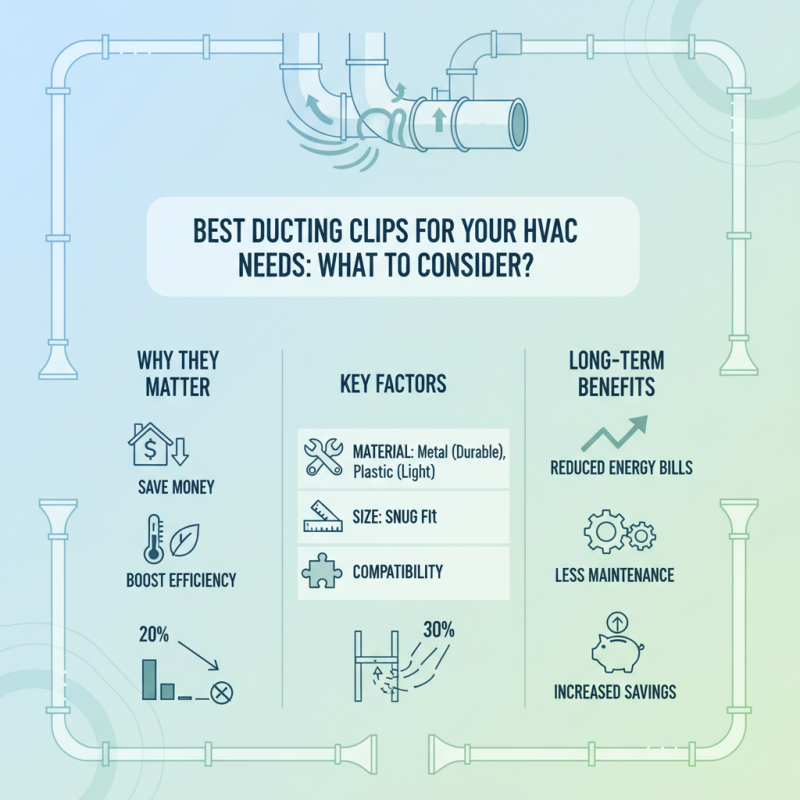
Ducting clips are essential components in HVAC systems. They play a critical role in ensuring that ductwork stays securely attached. According to the U.S. Department of Energy, inadequate duct connections can reduce HVAC efficiency by 20%. This inefficiency leads to higher energy bills. Choosing the right ducting clips is, therefore, crucial for optimal performance.
When selecting ducting clips, consider material, size, and compatibility. Metal clips offer durability, while plastic options may be lighter and easier to handle. The correct size ensures a snug fit, preventing air leaks. Reports show that improper installation can lead to 30% of heated or cooled air escaping before reaching its destination. This issue underscores the importance of quality clips.
Users often overlook the significance of choosing reliable ducting clips. It's tempting to opt for cheaper options. However, this might result in frequent replacements and added costs. The right choice can lead to long-term savings. Reflecting on these aspects is key to making an informed decision about ducting clips.
Understanding the Importance of Ducting Clips in HVAC Systems
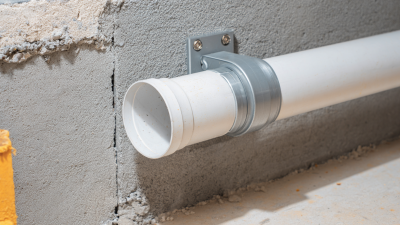
Ducting clips play a crucial role in any HVAC system. They ensure the secure attachment of ductwork, minimizing airflow leaks.
According to industry studies, poorly secured ducts can lead to energy losses as high as 30%.
Proper installation of ducting clips can significantly improve system efficiency.
Selecting the right clips involves understanding material and size. Many clips will corrode over time if made from inferior materials.
A study revealed that galvanized steel clips outperformed plastic ones in durability.
However, improper clip selection can lead to system inefficiencies and costly repairs.
Installation is just as critical as selection. Clips should be positioned at regular intervals to maintain duct integrity.
Neglecting this can lead to sagging ducts and reduced airflow.
It's evident that a thoughtless approach to clip installation can result in major HVAC failures. Awareness of these details is vital for effective HVAC management.
Types of Ducting Clips: A Comprehensive Overview
When choosing the right ducting clips,
it's essential to understand the different types available. Ducting clips come in various materials,
such as plastic, metal, and rubber. Each material serves a specific purpose.
For example, metal clips offer durability for heavy-duty applications.
However, they can rust over time. Plastic clips are lightweight and resistant to moisture.
Still, they may break under pressure.
Another factor to consider is the clip size.
It's important to select clips that fit your ducting snugly. If the clips are too loose, they may not secure the ducts adequately.
Conversely, overly tight clips might damage the ducting. There are also adjustable styles. These allow for flexibility in various installations.
However, they can sometimes be more complex to use.
Installation ease is a key aspect as well.
Some clips come with self-adhesive backing, simplifying the process. Yet, these might not hold up in high-temperature environments.
Checking the weight capacity of clips is equally critical. If clips cannot support the ducts properly, it could lead to failures.
Thus, take time to evaluate your specific needs before making a decision.
Key Factors to Consider When Choosing Ducting Clips
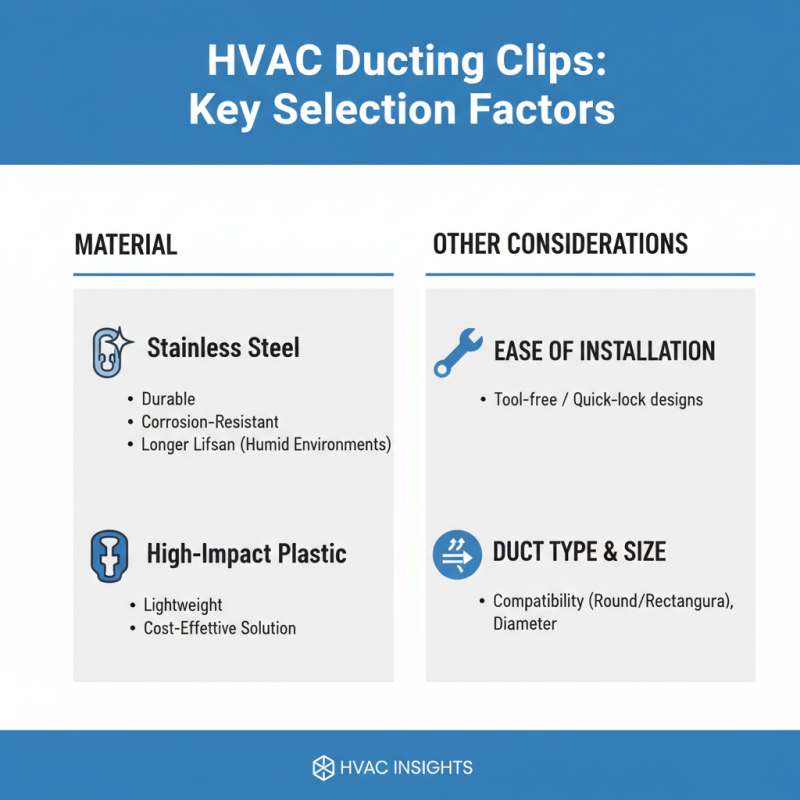
When selecting ducting clips for HVAC systems, several key factors must be considered. One important aspect is the material of the clips. According to industry reports, stainless steel clips are highly durable and can resist corrosion. This durability ensures a longer lifespan, especially in humid environments. Additionally, clips made from high-impact plastic can offer a lightweight and cost-effective solution.
Another aspect to focus on is the size and compatibility of the clips. It’s crucial to choose clips that fit your duct size perfectly. Poorly fitting clips can lead to airflow issues, leading to inefficiencies. In studies, HVAC systems can become up to 30% less efficient due to improper duct installation.
Moreover, the ease of installation should not be overlooked. Some clips require special tools or techniques for installation, which can complicate the process. Efforts to streamline this can save time and labor costs. The right choice should balance ease of use with performance. Reflect on these factors carefully before making a decision. Taking shortcuts may lead to regrets later on.
How to Properly Install Ducting Clips for Optimal Performance
Installing ducting clips properly is crucial for HVAC systems. Begin with measuring the length of the ductwork. Ensure clips secure the ducts tightly without pinching. A relaxed duct can lead to air leaks. These leaks decrease system efficiency, wasting energy.
Use a drill to secure one clip at a time. Avoid over-tightening; it can damage the duct material. Check the alignment frequently. Alignment impacts airflow and performance. Set aside time for adjustments, as this step can be tricky.
Inspect the entire system after installation. Look for gaps or misaligned sections. An uneven setup can cause noisy operation. Document any issues you find; they may need to be addressed later. Regular maintenance checks are necessary for optimal performance.
Maintaining and Replacing Ducting Clips: Best Practices
Maintaining and replacing ducting clips is essential for optimal HVAC performance. Over time, these clips can wear out due to stress and temperature changes. Regular inspections are crucial. Look for cracks or corrosion. If you notice these issues, it’s time to replace them.
When replacing ducting clips, consider the clip material. Metal clips offer durability but may corrode. Plastic clips are lightweight but can become brittle. Choose clips that suit your specific environment. Pay attention to the size too. Ill-fitting clips lead to air leaks.
Tips: Ensure you have the right tools ready. Sharp edges can be a concern. Always use gloves for safety. Proper installation will prevent future problems. Misalignment can lead to airflow inefficiencies, so double-check every installation. Taking these small steps can save energy and money in the long run.